A Top 5 List: Modern Poetry Classics

Shanah McCready, known to the Internet as the Bionic Book Worm, organizes a series of book-related Top 5 lists every Tuesday. This week’s theme is “modern classics,” which is quite a broad topic, and an inherently speculative one. After all, who knows what future generations of writers and readers will latch onto? I doubt anyone thought Theodore Dreiser’s Sister Carrie, for example, would cast such a long shadow on American literature.

The doubt involved in making a list of “modern classics” is doubly present when it comes to poetry. Given how vanishingly rare it is for a contemporary poet to achieve broad recognition in the literary community, let alone the general reading public, picking any collection as a potential staple of future reading lists seems, shall we say, hopeful.

But I shall remain hopeful. As such, I’ve decided to put poetry front and center on this list. Here are five poetry collections released since 2000, listed in order of release, which at the very least ought to be considered modern classics.

Sleeping with the Dictionary

1) Harryette Mullen, Sleeping with the Dictionary
University of California Press, 2002
Links: publisher | Amazon

I’ve lost track of how often I’ve pressed this book under the weight of the photocopier, curious to see how students will react to Mullen’s plays on form. This is a collection that turns “Goldilocks and the Three Bears” into a police blotter (“European Folk Tale Variant”), a courting ritual into a litany of tongue-twisters (“Any Lit”), and Shakespeare’s Sonnet 130 into a paranoid rant about the Walt Disney Company (“Variation on a Theme Park”). Mullen takes the diction and rhetoric we take for granted everyday and puts it through the grinder, showing how meaningless (or meaningful!) it is at base. It’s a collection I’m not sure I will ever full-heartedly love, but it’s one I will always deeply respect.


Sea of Faith2) John Brehm, Sea of Faith
University of Wisconsin Press, 2004
Links: publisher | Amazon

Whereas Sleeping with the Dictionary is a book that always inspires me to think about writing, John Brehm’s Sea of Faith in one that inspires me to actually write. Nearly every poem in the collection is one I wish I could have written, because Brehm’s an expert at converting raw sensory inputs into polished works. Take “Coney Island,” which piles one overwhelming detail on top of another, to the point where I believe that “we’ll actually / get on a rollercoaster / just to calm ourselves down.” For another: “Sound Check, Lower Manhattan,” which finds the profundity beneath what sounds like  “[j]ust a jumble of songs and jackhammers and / roaring garbage trucks.” Sea of Faith is probably my most obscure pick, which is a great shame. It deserves a wider audience.
 

Blood Dazzler

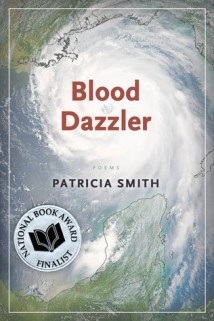
3) Patricia Smith, Blood Dazzler
Coffee House, 2008
Links: publisher | Amazon

An unfortunately timely choice, Patricia Smith’s collection of poems about Hurricane Katrina is a poignant and inventive account of that storm’s particular devastation. Smith both employs a wide variety of forms (free verse, sestinas, abecedarians, etc) and inhabits a number of personas (politicians, residents, even the storm itself) to get the full scope of the tragedy across to the reader. If nothing else, you should listen to some of Smith’s readings on the Poetry Foundation website, which brutally highlight the sound-play at work, especially with regards to the poem “Katrina”: “I was bitch-monikered, hipped, I hefted / a whip rain, a swirling sheet of grit.”
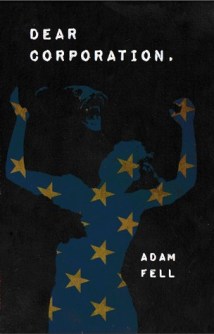
 

Dear Corporation,4) Adam Fell, Dear Corporation,
H_NGM_N, 2014
Links: publisher | Amazon

Inspired by the United States Supreme Court ruling Citizens United v. FEC, Adam Fell’s prose poems addressed to the person Corporation burn with confused rage and raging confusion; as one of the letters begins, “I don’t know how to say how I feel politely, or poetically.” Despite, or perhaps because of, the collection’s political origins, each letter is also a deeply personal statement; the mere thought of the speaker reaching out to Corporation, of all persons, for solace is heart-rending. And as with Smith, Fell is an excellent reader of his own work. If you can find a recording or see him read in person, do so.
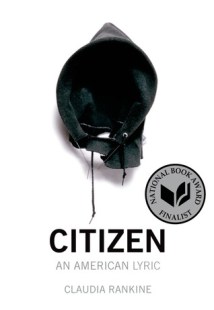
 

Citizen5) Claudia Rankine, Citizen: An American Lyric
Graywolf, 2014
Links: publisher | Amazon

If you follow poetry, then you knew this one was coming. A multimedia meditation on race in modern America, Claudia Rankine’s Citizen: An American Lyric proved relevant to the broader literary conversation in a way that so few poetry collections are able to today. That alone would almost guarantee it a spot on any list of classics; that these reflections are so sharp only puts it over the top. Seriously, the decision to cast John McEnroe as a Greek chorus in the essay on Serena Williams is absolutely brilliant (and given recent happenings, strangely prescient). To quote the book’s final line: “It was a lesson.” Indeed, indeed.

So there’s my list. What do you think? Are there any poetry collections released this century that you would have included? Let me know in the comments.

13 Fragments on the 2017 National Book Festival

i.
The first sign we were in for a crowd: the entire subway car I’d just boarded at Gallery Place emptied out, one stop later, at Mount Vernon Square. Everyone started murmuring the same thought: “A lot of people going to the book festival.”

ii.
I was working off virtually no sleep. I almost decided to just stay in bed and listen to the rain falling down on Baltimore. Instead, I dragged myself to Penn Station and bought a ticket on the southbound MARC train. As we passed through station after all-but-vacant station on the way to D.C., I found myself rehearsing the transfer routes over and over again. I’m nervy when it comes to transit: being stranded due to a missed connection is one of my overriding fears. So is not knowing where to go next.

iii.
The mass of people I followed up the escalators and into the festival was a bit younger than I’d anticipated. I tend to assume that most people who enjoy reading are at least my grandmother’s age, forgetting that for children reading is still novel, still exciting in and of itself. Also, younger people probably have more stamina to walk back and forth through the cavernous labyrinth that is the Walter E. Washington Convention Center.

iv.
Occasionally the event staff would ask if we were looking for a particular author. As ten a.m. rapidly approached, literally everyone I heard gave the same answer: “David McCullough.” “I’m certainly not alone, then,” I thought as we all snaked our way from one set of escalators to the next. I’m ashamed to admit he’s the only author on the schedule I’ve read. (A used paperback copy of Truman, which has since fallen apart, is the best twenty-five cents I’ve ever spent.)

v.
The organizers placed the main stage of the festival in the most out-of-the-way spot possible, in a ballroom on the third floor. Later on, I would guess that this was to better manage foot traffic. Some of my colleagues would attempt to see J. D. Vance of Hillbilly Elegy fame, only to immediately give up upon seeing the line. Best to keep that crowd isolated. (That there were sizable lines at a book festival is about 1 part frustrating to 3 parts heartening.) I lucked out with McCullough: I was able to waltz in and find a seat right as the Librarian of Congress started playing master of ceremonies. Perhaps 10 a.m. is still early on a Saturday. Perhaps the rain kept people away. Or perhaps we just live in a world where Thomas Friedman is more popular than David McCullough.

vi.
I had about an hour to kill before Alice McDermott’s talk. (Full disclosure, if ramblings require one: McDermott is a professor at my institution.) I went down and around and then down again and around again to the book sales, grabbing a copy of McCullough’s new book. I thought about getting it signed, only to discover while in line to check out that the book was already, in fact, signed. Really, I should have noticed the sticker on the front cover a lot sooner than that.

vii.
McDermott’s forthcoming book sounds exactly like the sort of thing I would recommend to my grandmother, and I mean that in the best way possible. She raised an interesting point about street scenes in films nowadays: you don’t see nuns in them all that often anymore. I suppose if I imagine nuns walking down the street, it’s in the context of the bomb scene from the Adam West Batman movie.

viii.
As someone who writes poetry, I was of course disappointed and not in the least bit surprised to see the poetry room was only half-filled at best for Marie Howe and Adrian Matejka. At least those empty seats got to see something interesting. Sure, the poetry was pretty solid; I ended getting Matejka’s new collection. But I’m more talking about Howe’s stage presence, which was…I think I settled on the term “space cadet.” She was not aware that there were screens behind her (to help the people in the back, y’know, actually see what’s happening.) She was rather confused when she noticed people staring up and to the side, and startled to see her own face projected twice over.

ix.
I have to wonder if the Library of Congress will edit that part out of the recording. I really hope they don’t.

x.
Of everyone at the festival, Jesmyn Ward was the one author I’d been most meaning to read. Knowing me, I shall now resolve to read her and then not get to it for another 12-18 months. I really ought to, though, for her new book sounded pretty interesting. (Alas, by this point, my energy was starting to flag, so the specifics have faded from my memory. At least all of this should be on Internet at some point in the near future.)

xi.
Question from a child at John Scalzi’s presentation: “When you were writing your books, did you feel good about yourself?” That sounds both like an accusation and a prodding to a potentially harrowing thought. Well done, kid.

xii.
Thing on the program I missed but which sounded enticing: “Walden, a game.” I have to believe it was like the terrible idea I had to make a video game adaptation of Silas Marner, in which the player-character just works at weaving for years and years, then has all their gold stolen seemingly at random.

xiii.
While walking past one of the children’s stages, we overheard the presenter explaining why District of Columbia license plates read “Taxation Without Representation.” Never to early to get started on the path to revolution. If a book festival is to be good for anything, it might as well be good for that.

“The Sin of the Apple”: Writing from the POV of an Object

I’ve long been fond of Howard Mittelmark and Sandra Newman’s compendium of writing advice, How Not to Write a Novel: 200 Classic Mistakes and How to Avoid Them—A Misstep-by-Misstep Guide (Harper Perennial, 2009). It’s a rather self-explanatory concept: these are the problems that plague countless unpublishable manuscripts, so do your best to avoid them. It’s also hilarious, both in terms of the bad writing samples and the authors’ commentary.

Now, categorical rules for good writing are rare indeed, and while their advice holds true in the vast majority of circumstances, Mittelmark and Newman don’t claim that their list is authoritative. To quote from their introduction: “We do not propose any rules; we offer observations. ‘No right on red’ is a rule. ‘Driving at high speed toward a brick wall usually ends badly’ is an observation.”

Even the least promising creative devices can be put to good use, however high the degree of difficulty. Case in point: making the narrator an inanimate object.

In their chapter on POV, Mittelmark and Newman write a short paragraph on the subject, with the wonderful title of “King Lear from the Point of View of the Throne”:

Writing from the point of view of a spoon, the world’s smallest mosquito, or Nero’s fiddle is generally inadvisable. The author is immediately faced with the task of accounting for the spoon’s ability to type, interest in human affairs, etc. (Unless it is a literary novel, where such things pass without comment.) Writing such a book is very difficult, and such strained gimmicks generally backfire. So unless you have an inner passion that drives you, willy-nilly, to sing the secret life of the toaster, it’s better to look to the toaster’s owner for you protagonist.

The whole “how can a spoon type?” question strikes me as overly literal-minded, but the point stands. “Strained gimmick” is a good phrase here. When I’ve gotten such stories from students (and I have), the inanimate POV is usually treated as some big twist. They’ll write a fairly mundane scene, and then at the end suggest that a spoon or whatever is narrating. It’s a twist on par with “The narrator was dead the whole time,” or “It was all a dream,” in that it doesn’t really add anything to the piece. We don’t learn what it means to be a spoon or a literal fly on the wall. It’s just a swerve for the sake of swerving.

So here’s a question: how do we break this rule successfully? Is there an example of a story written from an inanimate object’s point of view that benefits from that perspective? Well, I think I’ve found one: Luisa Valenzuela’s “The Sin of the Apple.”

Collected in Clara: Thirteen Short Stories and a Novel (trans. Hortense Carpentier and J. Jorge Castello, pub. Harcourt Brace Jovanovich, 1976), “The Sin of the Apple” is a very short story, just 256 words long. It’s more of a monologue than anything else, which the apple directs at those whose look upon it, up until it falls, ripe and ready to be eaten.

So what does this story piece do right? For one thing, Valenzuela gives the apple clearly-defined traits. That is, she treats the POV-object as a character, not merely as a narrator. Consider the first few sentences: “They scrutinize me with eyes of hunger, those abominable gluttons. I’m beyond your reach, gentlemen, and I don’t intend to budge” (all quotes from p. 77). We can see that the apple is resolute, is perhaps a bit haughty, and has a negative opinion of those who’d seek to eat it. And the direct address, “gentlemen,” grounds the text in a specific situation. No generalities here; someone wants to eat the apple now.

Compare the above to a hypothetical rewriting: “The men below look hungry, but they have a hard time reaching me.” This conveys the same literal scene as Valenzuela’s text, but the apple’s character has vanished. It now relates events without comment, which is not quite as interesting for a protagonist. It also makes the text sound more like a riddle than story, playing it too coy with the identity of the narrator (if the title hadn’t given it away, that is).

Once she has established the apple’s attitude and personality, Valenzuela starts expanding on the apple’s status as an apple. Not for nothing does that narrator refer to itself as “the historical fruit”:

Remember: I’m a descendant, as you know, of Paris’s apple, of William Tell’s, of those of the Hesperides. I’m even related, in a direct line, to the scientific apple of Newton, the apple that has done so much for the human race. I’m a descendant . . .

These references serve two purposes. Firstly, they reinforce and even explain the apple’s self-regard. If the apple’s ancestors are so illustrious, able to start wars and inspire scientists, why shouldn’t the apple be proud? Secondly, they force the reader to consider the role of the apple in human society. It’s an object we normally take for granted, yet it figures into so much of our collective culture. Remember how I said that many stories from the POV of an object don’t really benefit from that perspective? This one does, because it takes the time to explain why it matters.

Of course, there’s one hugely important cultural association the apple has neglected to mention so far: Adam and Eve. (Yes, yes, the fruit they would have eaten was likely not an apple, but the association remains.) It’s a telling detail to forget: humanity is brought low in that story, and the apple is riding high on its ego. So it’s only fitting that, at this precise moment, the serpent appears to remind the narrator “of the frailty of [its] species, the great shame of the apple.”

This shame, we quickly see, has a profound effect on the apple: “I feel the shame mounting through the stem, it makes me hot, I feel myself blush. Oh, how red I am!” In literal terms, the apple is ripening, but in terms of the apple’s character, it’s the completion of an arc. The apple’s pride has proven fragile, and a fall, both literal and metaphorical, is sure to follow. Valenzuela has not simply compared ripening to blushing; she has made that comparison emotionally credible.

Then—and I must admit, this is the one decision in the piece that I’m not sure is successful—the POV shifts from the now-fallen apple to a third-person narrator focused on the men who had been eyeing it. We see one of the men bite into the apple, and then justify himself: “‘It’s only natural, it was ripe and it fell.'”

I see the emphasis on the word “natural,” which also appears earlier in the paragraph, as a crucial element here. It casts the apple’s monologue as something like an etiological fable, that is, a fable explaining why something is the way it is. In this case, apples turn red when they’re ripe because they’re ashamed of their role in the fall of man. An interesting fable, yes, but not as interesting as the character study. If nothing else, shifting the POV in a piece this short is bound to be disorienting, no matter how well-executed.

Still, we can learn a lot from following Valenzuela’s example. A POV-object should not be a cipher, a mere lens. It will have similar needs to a POV-person: a defined character, an emotional arc, etc. Crafting those traits and arcs and such requires some serious forethought and reflection, but such is the case for any piece of writing.

Also, and perhaps this is a personal preference, but this sort of piece should probably be kept short. There’s an inherent absurdity in an inanimate object telling a story, Valenzuela’s piece not excepted. At a certain point, the narrative will be ludicrous as more and more human-like qualities are given to the POV-object. This is obviously bad news for a serious-minded piece. And as for a humorous piece, well, comedy is like poetry: an art of concision.

I think I’ll leave you with a little writing exercise to go along with the discussion:

As mentioned above, Mittelmark and Newman call this particular device “King Lear from the Point of View of the Throne”. Try writing a short piece, say 250 words, which is precisely that: a story narrated by King Lear’s throne. (If you haven’t read King Lear, then 1) what are you waiting for? Read it! and 2) in the meantime, pick another royal story and try that.)

Think about how Valenzuela approaches the apple, giving it character and drawing on the associations it has for us, and apply that thought process to the throne. You also have a key piece of information to play with: this throne has a particular occupant. What’s that relationship like? How does it affect the narrator, if at all?

Giving Children the Classics: Moppet Books and Copyright

For the past few weeks, Publishers Weekly has been covering a copyright case involving publisher Moppet Books, which seeks to print a series of picture book adaptations of several classic novels that are still under copyright. These “KinderGuides,” as Moppet calls them, would aim to get young children interested in reading classic works of fiction. However, the estates of several authors, as well as Random Penguin House and Simon & Schuster, have brought suit to prevent the books’ publication. Thus far, the litigation has gone the copyright holders’ way.

As Andrew Albanese reported this past Thursday, Judge Jed Rakoff of the U. S. District Court for the Southern District of New York has:

…signed off on a permanent injunction immediately barring Moppet Books from distributing in the U.S. any versions of its KinderGuides series held to be infringing, until the works on which they are based enter the public domain. In addition, Moppet Books also agreed to destroy all current copies of the infringing works “in its possession or under its control” within 10 days… [However,] the injunction includes an automatic stay on the destruction of existing stock, pending the “final outcome” of the appeal process.

I am obviously not a lawyer, so I don’t know whether Moppet Books’ KinderGuides are sufficiently transformative to qualify for fair use, as their defense has claimed. (Completely uninformed gut feeling: the copyright holders are in the legal right here.) And I can’t comment much on the adaptations themselves, since all I’ve seen of these books are few scattered page scans included in the press coverage.

What I can do, though, is talk about the concept of adapting classic novels for children. Based on my own experience, I think that something like the KinderGuides could be a valuable tool for getting children interested in the classics, and it is a shame that copyright law makes publishing such adaptations for tomorrow’s canon so difficult.

When I was in elementary school (probably 3rd grade), I remember a used book seller coming to our classroom and laying out tons and tons of cheap books for us to buy with our spare quarters. Younger me came across a somewhat beat-up paperback with a cool looking cover and an interesting title: Around the World in Eighty Days.

Now, this was not in fact Jules Verne’s original 1873 novel, but rather an illustrated and abridged version published by Moby Books. And oh, how I loved it. Every spare moment I had for the next week went toward following the adventures of Phileas Fogg and Passpartout in their quest to, well, travel around the world in eighty days. I can still see Passpartout’s towering figure from the illustrations on every other page, still feel the tension from the hurried, perilous transatlantic voyage on the Henrietta.

I wouldn’t read the original, unabridged version of Around the World in Eighty Days for a few more years (which was about the time it took me to realize that I hadn’t actually read it yet). But that cheap little paperback sparked my love of Jules Verne, and for that I’m thankful. I’m pretty sure that if I had started with the original text, younger me would have been rather bored and confused, or at least overwhelmed by the length, and would thus be reluctant to give Jules Verne a fair shake when he was older.

For the Twains and Melvilles of the world, the Dickenses and Brontës, it’s easy to find approachable adaptations of their works for children. After all, all their books are in the public domain, so there is no legal barrier to producing them. But when it comes to the likes of Hemingway, Kerouac, Clarke and Capote (the authors whose estates are involved in the Moppet case), copyright law makes producing such adaptations far more difficult.

Whether something like KinderGuides would actually lead to more children reading classic literature, I’m not certain. But at the very least, it did so for me. It’s an idea worth pursuing.

The Poetry of Anticipation: On Edward Mullany’s Syntax

In her book The Art of Syntax (Graywolf Press, 2009), the poet Ellen Bryant Voight places special emphasis on a linguistic concept that she calls the “fundament,” which is the unsubordinated subject and predicate of a sentence. Whenever we read a sentence containing a subordinate clause, such as the one that you are currently reading, we instinctively look for the main noun-verb combo to ground us. That is, after all, the fundamental part of the sentence. Only when we arrive at that particular phrase can we be sure of the sentence’s primary meaning. “To say…that a sentence provides a complete thought,” writes Voight, “is actually to say it resolves the brain’s search for the fundament” (p. 6).

You might think of that search for the fundament as a source of tension in a sentence, one which the fundament itself will relieve. Many poems feature sentences which deliberately delay the fundament to exploit that tension, to place the reader in a state of anticipation that is only satisfied at the poet’s chosen moment.

This strategic delaying of the fundament shows up repeatedly in Edward Mullany’s collection of short poems, If I Falter at the Gallows (Publishing Genius, 2011). Indeed, the ideas of anticipation and incompleteness runs through the book from beginning to end. The title not only suggests an upcoming demise, but also takes the form of a subordinate clause in search of a fundament. To scan the cover art from left-to-right involves moving over an expanse of empty, white space between the silhouettes, breaking the implied image into two discrete sections. A good number of poems feel like premises that lack conclusions, or even vice versa.

Mullany’s syntax is no different; his one sentence poems often delay the main clause until near the end for maximum impact. But what I find most compelling in Mullany’s syntax is how it wrings extra tension out of the fundament even after the reader has discovered it. I’ll look at two such poems to demonstrate.

The first poem is “Widowed,” which originally appeared in the now-defunct literary magazine Keyhole. The first three lines consist of a long abverbial phrase, a sure sign that the fundament is being delayed: “During the previews for a movie / that was playing on a weekday / afternoon in a mall in a small town” (lines 1-3). This clause does a lot to set the scene for the poem, giving us time and location as context for the main action. There’s a fair amount of branching syntax here as well, which slows down the pace: a relative clause, some prepositional phrases. The reader is ready to know what happened at these previews. They will find out, but in due time.

The next line introduces the first half of the fundament, the subject: “a man” (line 4). But the fundament has only been started, not completed, for the speaker inserts two relative clauses to expand on the subject: “who’d entered the theater / alone, and who’d been unsurprised / to find himself still alone” (lines 4-6). Because these relative clauses are in the past perfect, placing the actions they described at some point before the previews started, the reader is in some sense further from the main point of the sentence than they were just a few lines ago.

Just when the reader might be growing frustrated with the poem’s syntax, the speaker finishes off a line with what looks like the second half of the fundament, the main verb phrase: “got up” (line 6). The whole sentence up to this point is an elaborate way of saying, “The man got up.” We of course have the context which makes the poem more interesting than that. But those four words are the core of the thought.

Except, the predicate doesn’t end with “got up.” It’s not even the predicate’s only main verb phrase, because the next line coordinates it with a second: “and went out to the lobby” (line 7). If anything, “went out” is the dominant verb phrase of the sentence, because the poem immediately tacks on two more phrases parallel to it: “and out / through the front doors and out into / the bright light” (lines 7-9). In the same way that getting up is a prelude to the real action, the phrase “got up” proved to be a prelude to the “real” predicate.

The second poem I’ll consider, “The Not So Simple Truth,” goes a step further than “Widowed,” in that it delays not just the fundament of the sentence but the sentence itself. The first lines of this poem are a series of sentence fragments:

Potatoes. Dirt and
water. And a soft

towel left for us while
we shower. (1-4)

The reader is presented with a list of items, with no guarantee that a predicate will ever appear (although the “and” which starts the third fragment does suggest the list is concluding). The fact that this list will function as the subject of the poem’s one grammatical sentence only becomes apparent from the next two words: “These // things” (4-5).

Already we see how Mullany uses punctuation to delay delivering the subject. One could easily rewrite the sentence with more standard punctuation, for example with a colon: “Potatoes, dirt, water, and a soft towel left for us while we shower: these things…” It’s not necessarily elegant, but it is grammatical. Yet Mullany uses periods, rather than serial commas, to separate items. The reader must first consider each item as a discrete item, rather than as part of a collective grouping that the above rewriting might suggest.

“These // things” gives us the subject’s noun phrase. The predicate’s verb phrase follows immediately. The main verb is “are” (5), but that’s as nondescript a verb as one can have. We technically have the fundament, in that we have the head of the predicate phrase, but not the satisfaction it provides. “Are what?” the reader must ask. The sentence responds: “no / truer” (5-6). The topic of the sentence is becoming clearer: the “truth,” in whatever sense, of the aforementioned things. However, the word “truer” is a comparative, which implies a point of comparison. One mystery solved, another presented.

Instead of simply providing us with that point of comparison, the poem first mentions the grounds of that comparison: “for their // plainness” (6-7). This phrase is useful for understanding the predicate, in that we’d like to know what the speaker means by “truth.” But the phrase also returns us to “these things,” encouraging us to see the items as plain. (Easy with the potatoes, perhaps a challenge for the soft towel.) When one might expect the poem to move forward through the predicate, it instead cycles back to the subject.

What does such backward-looking move achieve? I’d call it a mental smash-cut. The reader’s mind has just reproduced the starting images when the poem finishes by throwing on several new ones: “than peas / or pus or leprosy” (7-8). Finally, the point of comparison arrives. While the peas might not be so different from the potatoes, the diseased imagery of the final line represents a sharp break from the rest of the poem and its quotidian objects. The reader, anticipating mere completion, receives a broken-skinned punch.

The takeaway for your poetry: consider the holding back the fundament of a sentence, letting the reader anticipate the next move. You might, as in “Widowed,” use that delay to weave in context or show a character’s thought process. You might, as in “The Not So Simple Truth,” decide it best serves to set-up a punchy ending. Whatever the case, the reader will thank you for making the wait worthwhile.


A Poet of the People: François Villon in “If I Were King”

The original, 1855 edition of Walt Whitman’s Leaves of Grass begins with a free-wheeling prose introduction, touching on poetry, philosophy, and the American experience. Among the many topics Whitman covers is the role of poetry and the poet in the world of politics and government. Given his background as a journalist, it is not surprising that Whitman sees the poet as having a role to play in public affairs. He writes:

If peace is the routine out of him speaks the spirit of peace, rich, large, thrifty, building vast and populous cities, encouraging agriculture and the arts and commerce —lighting the study of man, the soul, immortality —federal, state or municipal government, marriage, health, freetrade, intertravel by land and sea . . . nothing too close, nothing too far off . . . the stars not too far off. In war he is the most deadly force of the war. Who recruits him recruits horse and foot . . . he fetches parks of artillery the best that engineer ever knew. If the time becomes slothful and heavy he knows how to arouse it . . .

A lovely sentiment, though in a time when poetry is not so widely read, perhaps difficult to believe. Yet it is so ecstatic in its praise that one cannot help but get caught up in its call to arms.

I found myself thinking back to this passage after watching If I Were King (dir. Frank Lloyd, 1938). The film may be set in 15th-century France rather than the 19th-century United States, but it still recalls Whitman’s vision of the poet in the public sphere. Even more: I think the film offers us another way to understand Whitman’s words.

Adapted from the play and novel of the same name by Justin Huntly McCarthy, If I Were King tells a fictional story about a real-life poet, François Villon. A rogue as well as writer, this film’s version of Villon (played by Ronald Colman) is something of a Robin Hood figure, stealing from the royal storehouses to feed the hungry citizens of Paris. Times are tough in the French city, with a Burgundian siege slowly starving the populace. Meanwhile the king and his court, who have enough food to last them six months, seem oblivious to the conditions on the streets.

Villon finds this state of affairs intolerable, and he will say so to anyone within earshot. This includes, as it turns out, an undercover Louis XI (Basil Rathbone), who has come to Villon’s favorite tavern in search of a traitor, his Grand Constable (John Miljan). Not only does Louis get his man, he also gets an earful from Villon, who takes him for an ordinary tavern-goer. After proposing an ironic toast to Louis (“May the Burgundians take the city away from him—better still, may they take him away from the city”), Villon claims that, given the chance, he would be much better at running the country:

I don’t wish to appear boastful, Brother Long-Nose, but I should think a child of two could do better. Had I been born in a brocaded bed, I might have led armies and served France. As it is you see me here, consorting with cutthroats and wantons and wasting my time with a dull old buzzard like you.

The aristocratic structure of French government greatly limits Villon’s potential power. He cannot be Whitman’s “most deadly force of the war” because he is not of the nobility, from whose ranks the generals are drawn. He can have no soldiers at his command to inspire, no people in the streets to rally to war.

Louis, poking at the poet’s presumption, asks what Villon would do if he, in fact, were king. While Villon mentions enjoying the finest of foods and purging the court of its inept and crooked nobles, his most inspiring proposal concerns how he would connect to his subjects:

VILLON: I’d try to know my subjects. I’d try to earn their devotion and loyalty, instead of their loathing.

LOUIS: By abolishing taxes, I suppose?

VILLON: No! By abolishing despair and substituting hope! I’d learn the longings in their hearts, as a man of the people would, seeing them as they are and admitting that their vices are as deep-rooted as their virtues. I’d treat them as my children, instead of as my enemies. So, by knowing the worst in them, I bring out the best in them.

He would still, as it turns out, be “consorting with cutthroats and wantons,” because those are the people he would be governing. It is somewhat foolish to talk about a democratic spirit to monarchical rule, but Villon’s vision shares at least Whitman’s love of the common people.

Villon soon gets his chance to put that vision into practice. The Grand Constable comes to the tavern, intending to arrest Villon for raiding the storehouses. A skirmish ensues, and Villon kills the Grand Constable, putting Louis in an unusual position: he must punish Villon for killing one of his advisers, and also reward him for killing a traitor. His solution: make Villon the new Grand Constable, and show him that governance is not as easy as it looks.

Indeed, Villon has great difficulty in his new position—but only when he must play by the rules of the aristocracy. Notably, getting the lords to even consider an attack on the Burgundians proves impossible. They do seem overly cautious, given the desperate circumstances. But Villon’s penchant for verbal sparring wins him no friends in the war room. Earlier in film, Villon quipped that “poetry is its own worst enemy,” and here he proves his own point. The nobility aren’t going to stand around and let some poet insult them; they will simply render his words powerless.

No, the poet is far more effective in governance where the common people are concerned. Most obviously, Villon calls on the masses of Paris to counter a charge from the Burgundians, which is what ultimately saves the city from starvation. The people’s surprise success is literally the only thing that convinces the generals to fight. “Who recruits him recruits horse and foot,” indeed.

But even his rhetoric within the court appeals to democratic principles. Consider his message for the Burgundian envoy, who offers the king “an honorable surrender.” Villon’s ode to the people’s strength would hardly seem out of place in Whitman’s preface:

Kings are great in the eyes of their people, but the people are great in the eyes of God, and it is the people of France who are speaking to you now. We are armed and provisioned. We are warm and comfortable behind our strong walls. We laugh at your threats. But, if we who eat were starved, if we who drink were dry, if we who are warm were frozen, our answer would still be the same: ha! We laugh at you, we the people, and the king.

So strong is Villon’s message for the envoy, it seems to win over even Louis, who laughs the envoy out of his court. This victory is short-lived, however; the fateful meeting with the generals follows soon after this scene.

If I Were King may present a rather optimistic view of what poetry can do in the realm of politics. Still, it acknowledges its limits, and in doing so, it helps to refine the praise that Whitman offers in his preface. The power that poets wield is not intrinsic to them. It depends on their audience.