Four Fragments on Nothing

Let me take you back, briefly, to late 2010.

My 12th-grade AP English teacher, Mr. LoGiudice, is out of school for reasons I can’t remember now, but he told us the day before he’d be absent. He’s left the substitute with a prompt that we’re to spend the entire period writing about. We just finished the unit on Shakespeare, so I’m expecting something related to Bard.

The substitute grabs a piece of chalk and, with a slightly confused manner about her, writes the prompt on the board, which I quote now in full:

Nothing.

There’s some laughter around the room, with a bit of disbelief mixed in. Who can possibly take this prompt seriously? Who can write an essay, even an awful SAT-style essay, on “nothing”? So I’m not sure anyone does. Certainly I don’t.

By this point in my life I have fancied myself a poet, by which I mean I like writing ballad-esque song lyrics and have been reading The Complete Idiot’s Guide to Poetry. As such, I decide to write a poem on nothing, a poem that interrogates the very concept of nothing.

It is, in something approaching an irony, the longest poem I have ever written up to this point: two pages written out, split into four sections. (That’s not actually very long, but I tend to cap out around 20-30 lines.) I throw in every approach to nothing I can think of. Allusions to Seinfeld, that show about nothing. Quotes from King Lear, where we’re admonished: “Nothing will come of nothing. Speak again.” The brains of politicians, because nothing is easier than mocking politicians.

I turn it in. I feel good about it. I go on to include it in at least one of my college applications. And for the longest time, I think no more of it.

*     *     *

Now, the purpose of that prompt in the context of the class was to introduce the unit on existentialism and absurdism, on the search for meaning in a universe that has none. It was a way of transitioning us from Shakespeare to Sartre, from Edgar and Edmund to Vladimir and Estragon. We never, so far as I can recall, discussed what we wrote the day Mr. LoGiudice was absent.

Yet I feel that little poem I wrote must have had some impact on me, because “nothing” keeps popping up in my work. “Nothing” grows in the fields. Magicians hide “nothing” up their sleeves. I speak of “a thunderclap / that releases nothing.” There is “nothing” to be concerned about.

One construction, in particular, I’ve discovered I’m fond of: “nothing but.” It’s a curious phrase, highlighting the object being named by denying the reality of all other objects. It’s so brazen an approach that it always carries an air of absurdity. It also lends itself to undermining itself. One of my published poems, “Rural Sound Check,” begins like this:

Nothing but pebbles sliding
under my sneakers, nothing
but groundhogs and garter snakes
darting through leaves on the roadside…

These two phrases cannot be true simultaneously; each denies the other. The implication must be that what the speaker initially believes to be nothing is, in fact, something, many things even.

Compare that to John Brehm’s poem “Sound Check, Rural Manhattan,” which directly inspired mine. His begins not with a “Nothing but…,” but a “Just…”: “Just a jumble of songs and jackhammers and / roaring garbage trucks…” Brehm’s speaker does not necessarily deny the existence of other sounds, merely their apparent significance. It is, perhaps, a more honest and nuanced way to approach his subject than I take. After all, when you begin as nihilist, there’s only one direction to go.

*     *     *

In The Wilds of Poetry: Adventures of Mind and Landscape, David Hinton describes the poetry of Gustaf Sobin like so:

A Sobin poem opens a “talk of mysteries,” a force field of wonder and query and unknowing. It begins somewhere already in process (often marked by ellipses), as if its beginnings were lost, thereby suffusing itself in silent/unsayable origin. It is often fragmentary, or otherwise fully of empty interstice. The language is always provisional, decontextualized, conditional, incomplete, full of words like as if, might, would, could. It revels in a vocabulary of vanishing: vestige, relic, obfuscated, elision, obliterated, nothing, extinguished, dismantled, empty, dissolving, invisible, illegible, abolished, nothing. (p. 290)

I’m not sure why Hinton feels the need to list the word “nothing” twice, but it illustrates the difficulty in writing about that which is mysterious or absent: we lack a good vocabulary for it. We end up speaking in negations (nothing, invisible, illegible) or in terms of destruction (dismantledabolished), rather than the continuous, affirmative presence that we might mean.

Granted, a creative poet can find ways around this problem of language. Sobin, for example, uses the power of the line-break to separate the prefix from the base word, allowing the word and its negation to exist simultaneously. One can see this in the poem “Languedoc,” with the phrase “that thin / il- / legible tremor” (lines 19-21). The tremor’s illegibility is made its most legible trait, rather than a problem we have in perceiving it.

But more often than not, in attempting to describe that which we call nothing, we’re left with abstraction, reiteration, and frustration. We may, after a time, feel like Prufrock: “That is not what I meant at all; / That is not it, at all.” Or, again, like Prufrock: “That is not it at all; / That is not what I meant, at all.”

*     *     *

I must confront the possibility that this post is a way of intellectualizing a personal fear of mine: have I nothing to say? Are my poems merely an excuse to string sounds and images together, with no recognizable end? Or do I have a subject, but lack the language to even think it, let alone record it?

A word I now realize is missing from Hinton’s analysis of Sobin: “doubt.” Why speak in a manner “provisional, decontextualized, conditional, incomplete,” why lead a poem with an “as if” or a “just,” why dismissively call these reflections “fragments,” why speak of “nothing” in the first place—if there is nothing to doubt?
A Top 5 List: Most Read Authors

Here’s another post inspired by a prompt from Shanah “The Bionic Bookworm” McCready: Top 5 Most Read Authors. This seems like a simple, objective list to compile: just check Goodreads and read off the results, right? Well, that will produce a list, and it is the list I went with. But there might be some wrinkles to it.

For example, I’ve a read number of omnibus collections of an author’s work, such as the complete poems of Rita Dove, Marianne Moore, and James Wright. Goodreads will count those as one book, even if they are really several individual books printed together. In absolute terms I’ve probably read more of Rita Dove than I have of some authors on this list. Yet there is something to be said about picking up a whole other volume from an author, reading more of their work with intent and not just because it happens to continue on the next page.

Moreover, my Goodreads stats only include books I’ve read since joining the site. That’s not a revelation, true, but it means that this list is skewed towards recent years. I know I read a whole bunch of Lemony Snicket and Donald J. Sobol books as a kid, but they’re not making it onto this list. Nor will this list account for re-readings. I’ve read 1984 five or six times by now, but that only gets George Orwell one point.

My point is: this list is not necessarily an accurate picture of my most read authors. But looking at it, it’s a damn fine roster, and if this list turns you on to just one of my favorite writers, then I’ll call it a victory.


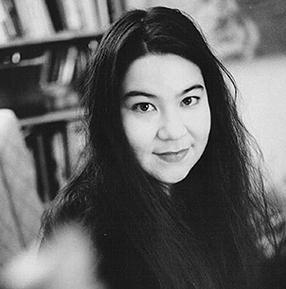
Brenda Shaughnessy5) Brenda Shaughnessy
Technically, the No. 5 spot on this list should be a six-way tie, but that would be rather much to condense into one paragraph. So I made an editorial decision and went with my favorite writer of the bunch. I first encountered Shaughnessy’s verse in Our Andromeda (Copper Canyon, 2012), which draws from Tarot cards and cosmic space for its sprawling depictions of motherhood. Her first collection, Interior with Sudden Joy (Farrar, Straus and Giroux, 1999), on the other hand, leans heavily on a choppy but still musical prose rhythm for its pieces. But it was her most recent collection, So Much Synth (Copper Canyon, 2016) that made her a contemporary giant in my heart. Two poems in particular stand out: “A Mix Tape: ‘Don’t You (Forget About Me)’,” which painstakingly details the process of making a mix tape for a crush, and “Is There Something I Should Know?” an epic and absolutely piercing reflection on early adolescence.


Andrew Hudgins4) Andrew Hudgins
At its worst, formal poetry can read as stiff and needlessly antiquated. At its best, well, you get someone like Andrew Hudgins. I first encountered Hudgins’ poetry through his verse autobiography The Glass Hammer: A Southern Childhood (Mariner, 1994), which to this day is still my favorite high-concept collection of poems. Its make great use of received forms to convey a child’s moment-to-moment moods, for example, the boredom-inducing “Gospel Villanelle.” But Hudgins also knows that the creaking rhythms of formal poetry have the power to unsettle. His first collection, Saints and Strangers (Houghton Mifflin, 1985) contains the blank verse piece “Air View of an Industrial Scene,” which ends with the dire line, “We’re watchers. But if we had bombs we’d drop them.” Meanwhile Ecstatic in the Poison (Overlook, 2003) begins with “In,” a common-measure ballad about kids playing in the clouds of pesticide trucks. No matter the form or the subject, Hudgins’ work is sure to prick at your nerves.


Shakespeare3) William Shakespeare
If this list were based on my lifetime reading habits, the Bard would take first place, and it wouldn’t be all that close. Both for classes and for pleasure, I always find myself going back to Shakespeare, and—no surprise here—he keeps getting better and better. I recently re-read Richard II, for example, and found the title character’s eloquence even more pointed and haunting than I’d remembered it. (Seriously, the “hollow crown” speech is my favorite bit from Shakespeare’s whole oeuvre.) The past few years, I’ve aimed to fill in my personal gaps in the Shakespeare canon, so I’ve read a couple of clunkers like Two Gentleman of Verona and Henry VIII. But I’ve also read such hidden gems as Troilus and Cressida, which is so cynical and war-weary you’d think it was the product of the World War I poets. You obviously don’t need me to tell you to read your Shakespeare, but for real: read your Shakespeare.


Larry Levis2) Larry Levis
When I first started taking creative writing classes in undergrad, I quickly realized something: my knowledge of poetry ended at around 1900. In a panic, I dove into the library stacks to fix that, and one poet in particular captivated me: Larry Levis. From the tightly controlled similes found in Wrecking Crew (University of Pittsburgh Press, 1972), to the sweeping, digressive reflections that make up The Widening Spell of the Leaves (University of Pittsburgh Press, 1991), to the stark confrontations with mortality that mark his posthumous collections: Levis’s work is always compelling. While, if I’m honest, my own writing most resembles that of Hudgins’, Levis is the writer here I most wish I could emulate, but simply lack the skill to do so. Who else could take the phrase, “Death blows his little fucking trumpet,” and make it work in not one but two completely different poems?


Ursula K. Le Guin1) Ursula K. Le Guin
Where do I even begin / with Ursula K. Le Guin? Perhaps with the masterful world-building found in her science fiction novels. Perhaps with the introspective tone that characterizes the Earthsea Cycle books. Perhaps with the fact that her mid-2000s Annals of the Western Shore series is literally the only series of books I have ever read in its entirety. Perhaps with her poetry, or her advice on the craft of writing. Not only do I keep going back to Le Guin, I keep going back to her in different genres and contexts. I’ve never read Shakespeare’s narrative poetry, or Levis’s short fiction, but Le Guin? Hell, I’d read a history of sandwich toothpicks if she were the one writing it. For some representative books, I’d check out The Left Hand of Darkness (Ace, 1969), The Tombs of Atuan (Atheneum, 1971, second Earthsea Cycle book), and Voices (Harcourt, 2007, second Annals of the Western Shore book). But start wherever you’d like. You’re in for a treat.

So there’s my Top 5. Does your list have any overlap with mine? Are there any authors here you’ve not read before but would like to check out? Let me know in the comments.

Living Like the Reeds: Aesop and Ammons

Let us begin with a simple image: reeds blowing in the breeze. In the hands of a painter, we have the beginnings of a new landscape. In the hands of a filmmaker, a calm opening shot.

In the hands of a writer, the seeds of a practical philosophy.

Aesop famously uses this image of wind-blown reeds in one of his fables, “The Oak and the Reeds.” As translated by Vernon Jones, the story goes like this:

An Oak that grew on the bank of a river was uprooted by a severe gale of wind, and thrown across the stream. It fell among some Reeds growing by the water, and said to them, “How is it that you, who are so frail and slender, have managed to weather the storm, whereas I, with all my strength, have been torn up by the roots and hurled into the river?” “You were stubborn,” came the reply, “and fought against the storm, which proved stronger than you. But we bow and yield to every breeze, and thus the gale passed harmlessly over our heads.”

The Oak and the Reed

In his introduction to the Barnes & Noble Classics edition of Aesop’s Fables, D. L. Ashliman says that this fable may well be “the capstone to the pragmatic moral philosophy of Aesop” (xxix). Time and again, the fables instruct us to accept our circumstances, whatever they may be, rather than railing against them; examples include “The Ass and His Masters” (“Why wasn’t I content to serve either of my former masters…now I shall come in the end to the tanning vat”) and “The Crab and the Fox” (“I had no business to leave my natural home by the sea…”).

Yet it is “The Oak and the Reeds” that presents Aesop’s brand of pragmatism in its most generally applicable terms. The wind stands in for any obstacle or hardship that one may face, not just one’s station in life. Low or high, weak or strong, everyone encounters a strong gale at some point. The best that one can do, it would seem, is go along with such events, rather than resisting them and breaking down.

Had Aesop not predated them by a good three centuries, I would be tempted to group him with the Stoics, who advised taking a similar approach to hardship. Consider the following passage from the Enchiridion, Epictetus’s manual for Stoic living:

If you are going to bathe, picture to yourself the things which usually happen in the bath: some people splash the water, some push, some use abusive language, and others steal. Thus you will more safely go about this action if you say to yourself, “I will now go bathe, and keep my own mind in a state conformable to nature.” And in the same manner, with regard to every other action. For thus, if any hindrance arises in bathing, you will have it ready to say, “It was not only to bathe that I desired, but to keep my mind in a state conformable to nature; and I will not keep it if I am bothered at things that happen.”

Epictetus’ bather could get worked up regarding the unpleasant behavior of his fellow citizens, could stand as stubborn as the oak. But their actions are outside his control. Better that he accord his will with nature, bending in the breeze like the reeds, and take the behavior of others as a given. He will thus keep his own mind untroubled.

Certainly this is prudent advice. So long as the difficulties concern you and you alone, it is difficult to refute. Indeed, whenever I read the likes of Epictetus or Marcus Aurelius, I find myself wishing I had their cool and dispassionate resolve.

But suppose the breeze is something more than a personal obstacle. Suppose it’s something which affects a large swath of society: an authoritarian government, or systemic injustice. To bend like the reeds, as the Stoics would suggest, may well make an individual’s life more bearable. But it does little for everyone as a collective. One might say that the lives of fellow sufferers are as beyond our control as those of the oppressors, and at any rate we lack the power to actually resist. But I feel that merely rationalizes passivity.

For comparison, let us turn from Ancient Greece to the 20th-century United States. “Small Song,” a short poem by A. R. Ammons, also uses the image of reeds bending in the breeze. In its entirety, it reads:

The reeds give
way to the

wind and give
the wind away.

I plan on doing a full dissection of the poem in a later post, but for now let’s note the difference between Ammons’s and Aesop’s reeds. For the fabulist, the wind acts upon the reeds and not the other way around. Indeed, the reeds only ever act by lecturing the oak for not letting the wind act upon it. For the poet, the apparent passivity of the reeds is in fact an action. Their bending makes it obvious that the wind is present.

What do we make of Ammons’s twist on the reed image? Considered in isolation, it is a pleasing little paradox, a short sentence dense with potential meaning. Considered in the context of Aesop’s fable, though, and one might find a message about resistance. Absorbing the wind’s abuse consequently makes it visible. Think of the specific phrase “give / the wind away.” To be given away, one must be trying to hide something, to sneak it by without notice. Those reeds, because they bend, prevent that from happening.

Sure, when the oak falls to the banks, it does so with a great crash. But reeds do not bend in silence; they flap and rustle, and they do so for as long as the wind is blowing. The oak’s resistance leads to one loud crunch, and then nothing. The reeds, on the other hand, will not be silenced until the wind is silenced. Unlikely heroes though they may be, they resist, and they endure.