
I like to think of myself as an omnivorous reader. I always have multiple books on my currently-reading shelf at any given moment, and they tend to be from disparate modes and genres. I’ll switch from a piece of music criticism to a poetry collection to a classic novel with little in the way of direct connections between pieces. Still, despite all this variety, my reading habits have tended to be fairly stable. About 2/3 of the books I’d finish would be poetry collections, with a hodge-podge of novels, nonfiction books, plays and comic books making up the other 1/3.
This year, however, that ratio has flipped. Only about 1/3 of the books I’ve finished this year (22/64) have been poetry collections. That’s a pretty significant and sudden shift, and it got me wondering: what’s behind this change in my reading habits?
It’s not as though I’ve lost my love of poetry, far from it. Sure, I’m no longer in a graduate school environment where I’m required to think about poetry more or less constantly. But I still write poems and pieces about poetry fairly frequently, and I believe that over time I’ve developed a more mature understanding of the art. And reading an excellent poem like Lynn Powell’s “Kind of Blue” or Ted Kooser’s “A Spiral Notebook,” to name two recent examples, still fills me with an unmatched sense of joy.
No, what’s changed is that finding the time to read poetry, at least how I think it best to read it, has gotten more difficult this past year. Quite simply, I’m rarely alone for long enough.
I’ve mentioned before how I believe that all poetry ought to be read aloud, that the sonic dimension of poetry is difficult if not impossible to appreciate unless one literally hears the words as they are reading them. I can’t tell you how often some aspect of a poem’s playfulness, form, or even meaning has eluded me until I’ve read it aloud to myself. Granted, there are poets such as Harryette Mullen or Jaimee Hills, whose work often defies the reader to wrap their tongue around it, but even when the experience of reading the poem aloud is unpleasant, that unpleasantness often helps me to start unlocking the work.
However, because I insist on reading all poetry aloud, I effectively limit the number of environments in which I can read poetry at all. It’s socially unacceptable, or at least awkward, to read aloud to oneself when other people are present; to do so imposes one’s private activity, even one’s private thoughts once interpretation is factored in, onto an unwilling audience. It’s bad enough that reading in someone else’s presence may give them the impression that you don’t value their company. But reading aloud at them more or less says, “I’d prefer you weren’t in my world at the moment.”
Now, when I was in grad school, this wasn’t that significant a limitation, because I lived by myself, and even if I happened to be on campus it wasn’t that difficult to find a secluded place. (The lounge we had access to, for instance, was usually empty.) Now, though, I’m more or less surrounded by people. I’ve moved back into my family’s home, and for various reasons I’ll not get into, my bedroom is effectively a living room. Further, I take mass transit into work, and if there’s one place where no one wants to hear anyone else talking, it’s a long-distance commuter bus.
The plus side of my current reading arrangements is that I’ve had more success than ever in tackling weighty tomes. I’ve had books like Michael Chabon’s The Amazing Adventures of Kavalier and Clay on my shelf for years, and I’d been reluctant to tackle them for their sheer length. But now that I find myself trapped on a bus for an average of four hours a day, such books no longer seem intimidating. In fact, their size has become almost welcome, for I know that they’ll last me several trips into and out of the city before I reach the conclusion. I just spent the past month working through George Eliot’s Middlemarch, and I’m sure I read at least 90% of that book on the bus. Those were some of the best hours that I’d spent all year.
Going forward, I know that I’ll have to make a more conscious effort to keep up on poetry, whether that means sneaking a few poems before bed, or during my lunch break, or what have you. But I think I’ll also just have to adjust my expectations. After all, I pursued an MFA precisely so I’d have more time to think about poetry. I shouldn’t be surprised that once I finished the program, I lost a lot of that time as well.
What do you think about all this? Do you find that changing circumstances change the sort of books that you read? If so, how so, and how do those changes make you feel? Let me know in the comments! And if for some reason you’re curious as to how else my new job has affected my reading style, here’s a link to a piece I wrote about dictionaries and the pure love of language. (No, really, that piece was inspired by pharmaceutical advertising. We take inspiration wherever we find it.)
 An aversion to such narration has been a feature of film criticism for some time now. James Agee, for example, shares his frustrations with the use of voice-over narration in book-to-film treatments in his March 10, 1945 column for The Nation, wherein he reviews an adaptation of Oscar Wilde’s The Picture of Dorian Gray (dir. Albert Lewin, 1945). Now, voice-over narration drove Agee up the wall regardless of context—see his writings on World War II propaganda films for more examples of that—but his remarks on Lewin’s film feel like the culmination of his bile towards this thoroughly uncinematic technique:
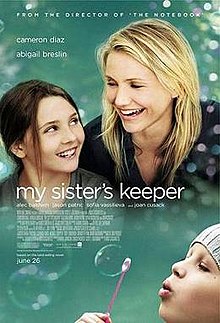 On a personal level, I can think of no more infuriating an example of a film abusing voice-over narration than My Sister’s Keeper (dir. Nick Cassavetes, 2009), based on Jodi Picoult’s novel of the same name. Cassavetes’s film not only inserts narration where it is not welcome, getting in the way of the actors’ attempts to convey the family’s many crises, but also early on attempts to simulate the novel’s use of multiple perspectives by just throwing establishing text with a character’s name onto the screen, before abruptly giving up on the idea about a third of the way through. Blessedly, when I saw the film in theaters, the sound at our screening was inaudible for the first few minutes, so I at least was spared the verbatim recitation of the novel’s prologue. (My poor grandmother thought she had finally gone deaf.)
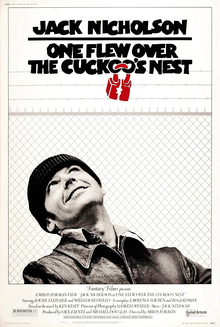 Granted, I’m also the sort of person who doesn’t place much value on an adaptation’s strict fidelity to the source material. For example, Ken Kesey’s 1962 novel One Flew Over the Cuckoo’s Nest is one of my all-time favorite reads, and Chief Bromden’s scattered yet illuminating narration is at the heart of my enjoyment of it. The film version (dir. Miloš Forman, 1975), as it happens, is one of my all-time favorite watches, and it not only ditches Chief Bromden’s narration, but also greatly reduces his role in the story; he goes from the co-protagonist to at most a side character. Yet because of the film’s strong performances, cinematography, décor, and score, I don’t mind that change, or any of the other myriad alterations, one bit.
 Michael Mingo's Blog