Recommended Readings in Sports Literature

I’ve recently finished teaching an intersession course here at Johns Hopkins—that is, a three-week course, held during the period between winter break and the start of the spring semester, on a topic of my choosing. As such, I’ve spent most of January thinking about the literature of sports, and how various writers manage to make the subject compelling to a general audience.

Speaking as someone who loves sports, someone who organizes dinner plans and reading schedules around “the game tonight,” I often find written descriptions of sporting events rather dull. I’ll read newspaper recaps or student stories about some athletic contest, and my eyes will start glazing over the text immediately. As a reader, I want more than a litany of individual events. I want an actual narrative, or an argument, or something musical.

As such, most of the pieces I selected for the syllabus take an indirect approach to sports. Rather than focusing on the outcome of the game—the thing we care about when watching sports—they tend to emphasize the beauty inherent in athletic excellence, or the personal significance that the sport holds for the characters, or what the sport tells us about society. Such approaches are not just more creative than the play-by-play method, but are also more appealing to a reader who doesn’t care about sports but still appreciates good writing.

What follows are a series of pieces from my syllabus that my students seemed to respond to the most. They all either provoked interesting discussions during class, or had a clear influence on their own creative efforts. Each of these works, I believe, tells us something about how successful sports writing functions.

“Analysis of Baseball” by May Swenson (link here)

May Swenson’s poem “Analysis of Baseball” breaks the title game down to its constituent parts, down to the people and equipment necessary for it to occur. That sounds like the driest poem in history, but it’s a blast to read because Swenson privileges sound above all else. The poem’s paratactic phrasing, insistent repetition and constant rhyming results in a work that is quite playful coming off the tongue. Consider the following excerpt:

Bat waits
for ball
to mate.
Ball hates
to take bat’s
bait. Ball
flirts, bat’s
late, don’t
keep the date. (lines 17-25)

Obviously we can see the heavy alliteration and rhyme, which would make for a sonically dense poem to begin with. But also consider how the enjambment creates tiny pauses right as we learn the pitch has fooled the batter. Just as the pitcher has played his foe like a fiddle, Swenson has the reader right where she wants them.

On the first day of class, I had my students write imitations of the various baseball poems we discussed, and “Analysis of Baseball” was the most popular model. Conceptually it lends itself to that exercise well, and it was quite fun to hear what happened when students allowed themselves to chase the sound while describing the sport of their choosing.

“Body and Soul” by B. H. Fairchild (link here)

One of my colleagues—a tip of the ol’ hat to J. P. Allen—sent me a link to this poem when I was first designing the course, and I’m forever grateful for that. Whereas Swenson’s poem homes in on how the game of baseball is played, B. H. Fairchild’s “Body and Soul” concerns itself with why people bother playing it.

An extended narrative about working class men playing sandlot baseball in Oklahoma, “Body and Soul” is at once a humorous yarn and a meditation on the nature of masculinity. These grown men, short a player for a full team, allow a fifteen-year-old to join them. The kid, to their shock, proceeds to hit a whopping five home runs against them—turns out the kid was a young Mickey Mantle. It’s the exact sort of plausible-enough tall tale you’d expect to hear from your grandfather at barbecue.

But it’s the sections where Fairchild explores the psyches of his characters where the poem really comes to life. Why, the poem asks, did the men keep on pitching to Mantle when he kept taking them yard? It all comes down to foolish, self-destructive male pride:

…they had gone through a depression and a war that had left
them with the idea that being a man in the eyes of their fathers
and everyone else had cost them just too goddamn much to lay it
at the feet of a fifteen-year-old boy. And so they did not walk him,
and lost, but at least had some ragged remnant of themselves
to take back home. (lines 97-102)

As a portrait of the everyday athlete, at once sympathetic and critical, “Body and Soul” is a difficult one to top.

“Pafko at the Wall” by Don DeLillo (link to excerpt here)

In this story—originally published as a novella, later made into the prologue to his 1997 novel Underworld—Don DeLillo chronicles one of the most celebrated days in baseball history: October 3, 1951, the day Bobby Thompson hit the Shot Heard ‘Round the World and the New York Giants won the pennant over their arch-rivals, the Brooklyn Dodgers.

Every baseball fan knows about this game, but DeLillo’s story makes it fresh by mostly ignoring the game itself. Instead, his narrative focuses on the spectators at the Polo Grounds, and the personal struggles they’ve brought to the ballpark. We follow the likes of Cotter Martin, a boy from Harlem who’s snuck past the turnstiles to watch his beloved Giants; Russ Hodges, the Giants radio announcer getting a sore throat at the worst possible time; and J. Edgar Hoover, the infamous FBI director who’s just learned about a Soviet atom bomb test.

My students found this emphasis on the spectators fascinating. Most sports literature—for an obvious example, think “Casey at the Bat”—treats the crowd as a single character, a chorus of approval or disapproval. Not “Pafko at the Wall”: each member of the crowd has their own inner life, their own motivations and fears. It’s a difficult task, and it requires a lot of space (the story runs about 50 pages in my anthology of baseball writing), but it’s a challenge worth accepting.

Me, I’m always struck by how DeLillo, on the few occasions he actually talks about the game, chooses to emphasize moments of comic failure: Bobby Thompson getting thrown out a second, Don Mueller hurting himself sliding into third, etc. DeLillo saves the beautiful descriptions for the fans, especially Cotter. The passage in which the kid sneaks into the Polo Grounds is just exquisite:

Cotter thinks he sees a path to the turnstile on the right. He drains himself of everything he does not need to make the jump. Some are still jumping, some are thinking about it, some need a haircut, some have girlfriends in woolly sweaters and the rest have landed in the ruck and are trying to get up and scatter. A couple of stadium cops are rumbling down the ramp. Cotter sheds these elements as they appear, sheds a thousand waves of information hitting on his skin. His gaze is trained on the iron bar projected from the post. He picks up speed and seems to lose his gangliness, the slouchy funk of hormones and unbelonging and all the stammering things that seal his adolescence. He is just a running boy, a half-seen figure from the streets, but the way running reveals some clue to being, the way a runner bares himself to consciousness, this is how the dark-skinned kid seems to open to the world, how the bloodrush of a thousand strides brings him into eloquence. (p. 658, in Baseball: A Literary Anthology, ed. Nicholas Dawidoff, Library of America, 2002)

Even in the bleachers, “Pafko at the Wall” tells us, athletics is transformative in more ways that one.

“Roger Federer as Religious Experience” by David Foster Wallace (link here)

A celebration of perhaps the greatest player in the history of tennis, David Foster Wallace’s essay does to Federer what Don DeLillo does to Cotter Martin: use language to convey a moment of kinesthetic brilliance. “Federer Moments,” Wallace calls them, and they require almost as much virtuosity to describe as they do to perform.

Wallace’s technique of choice here is the long sentence, and I do mean long: a single-sentence rally between Federer and Andre Agassi, for instance, lasts for over 250 words before finally reaching a period. But this is no show of self-indulgence. Rather, Wallace uses the long sentence to illustrate all the complexities of tennis that a player must understand simultaneously and intuitively, and also to suggest the sheer stamina needed in top-flight tennis. If you get tired just reading about Federer’s exploits, just imagine actually doing them.

But the part of the essay that most interested my students, and ended up framing a lot the discussion in subsequent classes, was an almost-digressive paragraph on the language we use to describe sports. Sports are often thought of as simulations of war, and the pageantry surrounding them, especially men’s sports, bears that out:

[I]n men’s sports no one ever talks about beauty or grace or the body. Men may profess their love of sports, but that love must always be cast and enacted in the symbology of war: elimination vs. advance, hierarchy of rank and standing, obsessive statistics, technical analysis, tribal and/or nationalist fervor, uniforms, mass noise, banners, chest-thumping, face-painting, etc. For reasons that are not well understood, war’s codes are safer for most of us than love’s.

In part, “Roger Federer as Religious Experience” is a corrective to this tendency in sports writing. It leads by example in praising the aesthetic qualities of a world-class athlete, asking us to see the emergent artwork in a point well-played. The world could certainly use more lyricism and less brute force, no?

Part II of Citizen: An American Lyric by Claudia Rankine (link to slighlty edited version here)

I’ve briefly talked Claudia Rankine’s Citizen before, as part of my list of modern classics in poetry. In particular, I noted how much I admired Rankine’s decision to use John McEnroe as a Greek chorus to discuss the various injustices Serena Williams has faced on and off the court. So I won’t dwell on that specific craft choice here.

Instead, I’ll highlight the section’s use images, as the mere presence of photographs and video stills made Rankine’s piece unique within the class. Sometimes, Rankine’s chosen images provide visual evidence of the incidents she cites, most notably the photo which closes the section: Caroline Wozniacki “imitating” Williams by stuffing towels into her shirt and skirt. But other times, they illustrate a point that’s rather difficult to express verbally.

In my most unfortunate omission this intersession, I neglected to include the image credits in my scan of the piece. As such, my students weren’t sure what to make of the image of one of Nick Cave’s Soundsuits: gaudily decorated performance art outfits that make a lot noise when worn. They are designed to call attention to the wearer’s body in a public space. Including the image of a Soundsuit provides a parallel to Williams’ position within the world of tennis: a black woman from Compton, standing in an historically white and wealthy space. Her body’s mere presence, Rankine suggests, calls attention to itself.

Someone whose image is notably absent from this section: Serena Williams. If that’s not a significant and deliberate choice, I don’t know what is.

Note: the version of this piece linked above lacks the embedded images that I’ve just been praising. Quite a shame, that. By all means, consider getting your hands on a physical copy.

“The Cruelest Sport” by Joyce Carol Oates (link here)

I’ll close with what is perhaps the most straightforward piece on this list. Taken from her collection of essays on boxing (titled, appropriately, On Boxing),“The Cruelest Sport” sees Joyce Carol Oates confronting the brutal realities of a sport she greatly enjoys. Boxing is not merely violent, like football—violence is part of boxing’s very essence, the intention of every fighter who enters the ring. Who can ethically justify watching a sport where the goal is not simply to win, but to cause one’s opponent to lose consciousness?

On top of the sport’s physical dangers, Oates doesn’t shy away from the socioeconomic conditions which underpin boxing. After all, what would drive someone to enter the world of prizefighting, if not economic necessity?

Boxing is only possible if there is an endless supply of young men hungry to leave their impoverished ghetto neighborhoods, more than willing to substitute the putative dangers of the ring for the evident, possibly daily, dangers of the street; yet it is rarely advanced as means of eradicating boxing, that poverty itself be abolished, that it is the social conditions feeding boxing that are obscene.

This article resonated with a lot of my students, because the harmful effects of sports institutions extend far beyond the boxing establishment. The head trauma crisis in the NFL and the appalling response to sexual abuse in US women’s gymnastics are just two recent examples. Sports are useful to a writer not simply because they’re exciting, but because they offer us a lens through which to view society. How does a business treat its workers? How do institutions treat their most marginalized members?

That’s enough from me. How about you? Are there any pieces of sports literature that you think exemplify a compelling approach to the subject? Let me know in the comments.

Four Fragments on Nothing

Let me take you back, briefly, to late 2010.

My 12th-grade AP English teacher, Mr. LoGiudice, is out of school for reasons I can’t remember now, but he told us the day before he’d be absent. He’s left the substitute with a prompt that we’re to spend the entire period writing about. We just finished the unit on Shakespeare, so I’m expecting something related to Bard.

The substitute grabs a piece of chalk and, with a slightly confused manner about her, writes the prompt on the board, which I quote now in full:

Nothing.

There’s some laughter around the room, with a bit of disbelief mixed in. Who can possibly take this prompt seriously? Who can write an essay, even an awful SAT-style essay, on “nothing”? So I’m not sure anyone does. Certainly I don’t.

By this point in my life I have fancied myself a poet, by which I mean I like writing ballad-esque song lyrics and have been reading The Complete Idiot’s Guide to Poetry. As such, I decide to write a poem on nothing, a poem that interrogates the very concept of nothing.

It is, in something approaching an irony, the longest poem I have ever written up to this point: two pages written out, split into four sections. (That’s not actually very long, but I tend to cap out around 20-30 lines.) I throw in every approach to nothing I can think of. Allusions to Seinfeld, that show about nothing. Quotes from King Lear, where we’re admonished: “Nothing will come of nothing. Speak again.” The brains of politicians, because nothing is easier than mocking politicians.

I turn it in. I feel good about it. I go on to include it in at least one of my college applications. And for the longest time, I think no more of it.

*     *     *

Now, the purpose of that prompt in the context of the class was to introduce the unit on existentialism and absurdism, on the search for meaning in a universe that has none. It was a way of transitioning us from Shakespeare to Sartre, from Edgar and Edmund to Vladimir and Estragon. We never, so far as I can recall, discussed what we wrote the day Mr. LoGiudice was absent.

Yet I feel that little poem I wrote must have had some impact on me, because “nothing” keeps popping up in my work. “Nothing” grows in the fields. Magicians hide “nothing” up their sleeves. I speak of “a thunderclap / that releases nothing.” There is “nothing” to be concerned about.

One construction, in particular, I’ve discovered I’m fond of: “nothing but.” It’s a curious phrase, highlighting the object being named by denying the reality of all other objects. It’s so brazen an approach that it always carries an air of absurdity. It also lends itself to undermining itself. One of my published poems, “Rural Sound Check,” begins like this:

Nothing but pebbles sliding
under my sneakers, nothing
but groundhogs and garter snakes
darting through leaves on the roadside…

These two phrases cannot be true simultaneously; each denies the other. The implication must be that what the speaker initially believes to be nothing is, in fact, something, many things even.

Compare that to John Brehm’s poem “Sound Check, Rural Manhattan,” which directly inspired mine. His begins not with a “Nothing but…,” but a “Just…”: “Just a jumble of songs and jackhammers and / roaring garbage trucks…” Brehm’s speaker does not necessarily deny the existence of other sounds, merely their apparent significance. It is, perhaps, a more honest and nuanced way to approach his subject than I take. After all, when you begin as nihilist, there’s only one direction to go.

*     *     *

In The Wilds of Poetry: Adventures of Mind and Landscape, David Hinton describes the poetry of Gustaf Sobin like so:

A Sobin poem opens a “talk of mysteries,” a force field of wonder and query and unknowing. It begins somewhere already in process (often marked by ellipses), as if its beginnings were lost, thereby suffusing itself in silent/unsayable origin. It is often fragmentary, or otherwise fully of empty interstice. The language is always provisional, decontextualized, conditional, incomplete, full of words like as if, might, would, could. It revels in a vocabulary of vanishing: vestige, relic, obfuscated, elision, obliterated, nothing, extinguished, dismantled, empty, dissolving, invisible, illegible, abolished, nothing. (p. 290)

I’m not sure why Hinton feels the need to list the word “nothing” twice, but it illustrates the difficulty in writing about that which is mysterious or absent: we lack a good vocabulary for it. We end up speaking in negations (nothing, invisible, illegible) or in terms of destruction (dismantledabolished), rather than the continuous, affirmative presence that we might mean.

Granted, a creative poet can find ways around this problem of language. Sobin, for example, uses the power of the line-break to separate the prefix from the base word, allowing the word and its negation to exist simultaneously. One can see this in the poem “Languedoc,” with the phrase “that thin / il- / legible tremor” (lines 19-21). The tremor’s illegibility is made its most legible trait, rather than a problem we have in perceiving it.

But more often than not, in attempting to describe that which we call nothing, we’re left with abstraction, reiteration, and frustration. We may, after a time, feel like Prufrock: “That is not what I meant at all; / That is not it, at all.” Or, again, like Prufrock: “That is not it at all; / That is not what I meant, at all.”

*     *     *

I must confront the possibility that this post is a way of intellectualizing a personal fear of mine: have I nothing to say? Are my poems merely an excuse to string sounds and images together, with no recognizable end? Or do I have a subject, but lack the language to even think it, let alone record it?

A word I now realize is missing from Hinton’s analysis of Sobin: “doubt.” Why speak in a manner “provisional, decontextualized, conditional, incomplete,” why lead a poem with an “as if” or a “just,” why dismissively call these reflections “fragments,” why speak of “nothing” in the first place—if there is nothing to doubt?

A Top 5 List: Most Read Authors

Here’s another post inspired by a prompt from Shanah “The Bionic Bookworm” McCready: Top 5 Most Read Authors. This seems like a simple, objective list to compile: just check Goodreads and read off the results, right? Well, that will produce a list, and it is the list I went with. But there might be some wrinkles to it.

For example, I’ve a read number of omnibus collections of an author’s work, such as the complete poems of Rita Dove, Marianne Moore, and James Wright. Goodreads will count those as one book, even if they are really several individual books printed together. In absolute terms I’ve probably read more of Rita Dove than I have of some authors on this list. Yet there is something to be said about picking up a whole other volume from an author, reading more of their work with intent and not just because it happens to continue on the next page.

Moreover, my Goodreads stats only include books I’ve read since joining the site. That’s not a revelation, true, but it means that this list is skewed towards recent years. I know I read a whole bunch of Lemony Snicket and Donald J. Sobol books as a kid, but they’re not making it onto this list. Nor will this list account for re-readings. I’ve read 1984 five or six times by now, but that only gets George Orwell one point.

My point is: this list is not necessarily an accurate picture of my most read authors. But looking at it, it’s a damn fine roster, and if this list turns you on to just one of my favorite writers, then I’ll call it a victory.


Brenda Shaughnessy5) Brenda Shaughnessy
Technically, the No. 5 spot on this list should be a six-way tie, but that would be rather much to condense into one paragraph. So I made an editorial decision and went with my favorite writer of the bunch. I first encountered Shaughnessy’s verse in Our Andromeda (Copper Canyon, 2012), which draws from Tarot cards and cosmic space for its sprawling depictions of motherhood. Her first collection, Interior with Sudden Joy (Farrar, Straus and Giroux, 1999), on the other hand, leans heavily on a choppy but still musical prose rhythm for its pieces. But it was her most recent collection, So Much Synth (Copper Canyon, 2016) that made her a contemporary giant in my heart. Two poems in particular stand out: “A Mix Tape: ‘Don’t You (Forget About Me)’,” which painstakingly details the process of making a mix tape for a crush, and “Is There Something I Should Know?” an epic and absolutely piercing reflection on early adolescence.


Andrew Hudgins4) Andrew Hudgins
At its worst, formal poetry can read as stiff and needlessly antiquated. At its best, well, you get someone like Andrew Hudgins. I first encountered Hudgins’ poetry through his verse autobiography The Glass Hammer: A Southern Childhood (Mariner, 1994), which to this day is still my favorite high-concept collection of poems. Its make great use of received forms to convey a child’s moment-to-moment moods, for example, the boredom-inducing “Gospel Villanelle.” But Hudgins also knows that the creaking rhythms of formal poetry have the power to unsettle. His first collection, Saints and Strangers (Houghton Mifflin, 1985) contains the blank verse piece “Air View of an Industrial Scene,” which ends with the dire line, “We’re watchers. But if we had bombs we’d drop them.” Meanwhile Ecstatic in the Poison (Overlook, 2003) begins with “In,” a common-measure ballad about kids playing in the clouds of pesticide trucks. No matter the form or the subject, Hudgins’ work is sure to prick at your nerves.


Shakespeare3) William Shakespeare
If this list were based on my lifetime reading habits, the Bard would take first place, and it wouldn’t be all that close. Both for classes and for pleasure, I always find myself going back to Shakespeare, and—no surprise here—he keeps getting better and better. I recently re-read Richard II, for example, and found the title character’s eloquence even more pointed and haunting than I’d remembered it. (Seriously, the “hollow crown” speech is my favorite bit from Shakespeare’s whole oeuvre.) The past few years, I’ve aimed to fill in my personal gaps in the Shakespeare canon, so I’ve read a couple of clunkers like Two Gentleman of Verona and Henry VIII. But I’ve also read such hidden gems as Troilus and Cressida, which is so cynical and war-weary you’d think it was the product of the World War I poets. You obviously don’t need me to tell you to read your Shakespeare, but for real: read your Shakespeare.


Larry Levis2) Larry Levis
When I first started taking creative writing classes in undergrad, I quickly realized something: my knowledge of poetry ended at around 1900. In a panic, I dove into the library stacks to fix that, and one poet in particular captivated me: Larry Levis. From the tightly controlled similes found in Wrecking Crew (University of Pittsburgh Press, 1972), to the sweeping, digressive reflections that make up The Widening Spell of the Leaves (University of Pittsburgh Press, 1991), to the stark confrontations with mortality that mark his posthumous collections: Levis’s work is always compelling. While, if I’m honest, my own writing most resembles that of Hudgins’, Levis is the writer here I most wish I could emulate, but simply lack the skill to do so. Who else could take the phrase, “Death blows his little fucking trumpet,” and make it work in not one but two completely different poems?


Ursula K. Le Guin1) Ursula K. Le Guin
Where do I even begin / with Ursula K. Le Guin? Perhaps with the masterful world-building found in her science fiction novels. Perhaps with the introspective tone that characterizes the Earthsea Cycle books. Perhaps with the fact that her mid-2000s Annals of the Western Shore series is literally the only series of books I have ever read in its entirety. Perhaps with her poetry, or her advice on the craft of writing. Not only do I keep going back to Le Guin, I keep going back to her in different genres and contexts. I’ve never read Shakespeare’s narrative poetry, or Levis’s short fiction, but Le Guin? Hell, I’d read a history of sandwich toothpicks if she were the one writing it. For some representative books, I’d check out The Left Hand of Darkness (Ace, 1969), The Tombs of Atuan (Atheneum, 1971, second Earthsea Cycle book), and Voices (Harcourt, 2007, second Annals of the Western Shore book). But start wherever you’d like. You’re in for a treat.

So there’s my Top 5. Does your list have any overlap with mine? Are there any authors here you’ve not read before but would like to check out? Let me know in the comments.

Living Like the Reeds: Aesop and Ammons

Let us begin with a simple image: reeds blowing in the breeze. In the hands of a painter, we have the beginnings of a new landscape. In the hands of a filmmaker, a calm opening shot.

In the hands of a writer, the seeds of a practical philosophy.

Aesop famously uses this image of wind-blown reeds in one of his fables, “The Oak and the Reeds.” As translated by Vernon Jones, the story goes like this:

An Oak that grew on the bank of a river was uprooted by a severe gale of wind, and thrown across the stream. It fell among some Reeds growing by the water, and said to them, “How is it that you, who are so frail and slender, have managed to weather the storm, whereas I, with all my strength, have been torn up by the roots and hurled into the river?” “You were stubborn,” came the reply, “and fought against the storm, which proved stronger than you. But we bow and yield to every breeze, and thus the gale passed harmlessly over our heads.”

The Oak and the Reed

In his introduction to the Barnes & Noble Classics edition of Aesop’s Fables, D. L. Ashliman says that this fable may well be “the capstone to the pragmatic moral philosophy of Aesop” (xxix). Time and again, the fables instruct us to accept our circumstances, whatever they may be, rather than railing against them; examples include “The Ass and His Masters” (“Why wasn’t I content to serve either of my former masters…now I shall come in the end to the tanning vat”) and “The Crab and the Fox” (“I had no business to leave my natural home by the sea…”).

Yet it is “The Oak and the Reeds” that presents Aesop’s brand of pragmatism in its most generally applicable terms. The wind stands in for any obstacle or hardship that one may face, not just one’s station in life. Low or high, weak or strong, everyone encounters a strong gale at some point. The best that one can do, it would seem, is go along with such events, rather than resisting them and breaking down.

Had Aesop not predated them by a good three centuries, I would be tempted to group him with the Stoics, who advised taking a similar approach to hardship. Consider the following passage from the Enchiridion, Epictetus’s manual for Stoic living:

If you are going to bathe, picture to yourself the things which usually happen in the bath: some people splash the water, some push, some use abusive language, and others steal. Thus you will more safely go about this action if you say to yourself, “I will now go bathe, and keep my own mind in a state conformable to nature.” And in the same manner, with regard to every other action. For thus, if any hindrance arises in bathing, you will have it ready to say, “It was not only to bathe that I desired, but to keep my mind in a state conformable to nature; and I will not keep it if I am bothered at things that happen.”

Epictetus’ bather could get worked up regarding the unpleasant behavior of his fellow citizens, could stand as stubborn as the oak. But their actions are outside his control. Better that he accord his will with nature, bending in the breeze like the reeds, and take the behavior of others as a given. He will thus keep his own mind untroubled.

Certainly this is prudent advice. So long as the difficulties concern you and you alone, it is difficult to refute. Indeed, whenever I read the likes of Epictetus or Marcus Aurelius, I find myself wishing I had their cool and dispassionate resolve.

But suppose the breeze is something more than a personal obstacle. Suppose it’s something which affects a large swath of society: an authoritarian government, or systemic injustice. To bend like the reeds, as the Stoics would suggest, may well make an individual’s life more bearable. But it does little for everyone as a collective. One might say that the lives of fellow sufferers are as beyond our control as those of the oppressors, and at any rate we lack the power to actually resist. But I feel that merely rationalizes passivity.

For comparison, let us turn from Ancient Greece to the 20th-century United States. “Small Song,” a short poem by A. R. Ammons, also uses the image of reeds bending in the breeze. In its entirety, it reads:

The reeds give
way to the

wind and give
the wind away.

I plan on doing a full dissection of the poem in a later post, but for now let’s note the difference between Ammons’s and Aesop’s reeds. For the fabulist, the wind acts upon the reeds and not the other way around. Indeed, the reeds only ever act by lecturing the oak for not letting the wind act upon it. For the poet, the apparent passivity of the reeds is in fact an action. Their bending makes it obvious that the wind is present.

What do we make of Ammons’s twist on the reed image? Considered in isolation, it is a pleasing little paradox, a short sentence dense with potential meaning. Considered in the context of Aesop’s fable, though, and one might find a message about resistance. Absorbing the wind’s abuse consequently makes it visible. Think of the specific phrase “give / the wind away.” To be given away, one must be trying to hide something, to sneak it by without notice. Those reeds, because they bend, prevent that from happening.

Sure, when the oak falls to the banks, it does so with a great crash. But reeds do not bend in silence; they flap and rustle, and they do so for as long as the wind is blowing. The oak’s resistance leads to one loud crunch, and then nothing. The reeds, on the other hand, will not be silenced until the wind is silenced. Unlikely heroes though they may be, they resist, and they endure.

Rhyme in Bob Dylan’s “Queen Jane Approximately”

This week, I’d like to talk about one of my all-time favorite songs, Bob Dylan’s “Queen Jane Approximately,” and about how it uses different kinds of rhyme to reinforce its meaning.

First released on Dylan’s 1965 masterpiece album Highway 61 Revisited, “Queen Jane Approximately” seems to have a very straightforward rhyme scheme. It’s composed of five stanzas, each following an abaBB pattern, where the capital letters represent the refrain line (“Won’t you come see me, Queen Jane?”). It’s a pattern only slightly removed from the classic ABXB pattern of the ballad, one of the fundamental forms in poetry and music.

However, the abaBB pattern only tells part of the story. The rhymes all have stress placed on the second-to-last syllable, while the b rhymes have stress placed on the last syllable. For an example, let’s consider the first stanza:

When your mother sends back all your invitations
And your father to your sister he explains
That you’re tired of yourself and all of your creations
Won’t you come see me, Queen Jane?
Won’t you come see me, Queen Jane? (lines 1-5)

As you can see, Dylan alternates between these two kinds of rhymes, poly- and mono-syllabic. But what good does knowing that do us when it comes to analyzing the song?

To see how the rhyme in “Queen Jane Approximately” reinforces the meaning, I’m going to consider two ways of conceptualizing these sorts of rhymes. The first way is to think about them is in terms of the masculine/feminine distinction.

Masculine rhyme, in traditional English-language poetics, refers to a rhyme in which the stress falls on the last syllable. All monosyllabic rhyme pairs (e.g., “dog” / “blog”) are examples of masculine rhyme, but so are polysyllabic rhyme pairs like “deny” / “reply“—effectively, the actual rhyme there is “-ny” / “-ply.”

Feminine rhyme, on the other hand, refers to a rhyme in which the last syllable is unstressed, but the second-to-last syllable is stressed. The classic example is “sharing” / “caring.” (Note that something like “sharing” / “sing” would not be a true rhyme, because the stress patterns don’t match up: the former ends unstressed, the latter stressed.)

Now, the masculine/feminine distinction plays into a restrictive view of gender norms, in which masculinity is coded as strong and femininity as weak, which is why the terms are (slowly) falling out of favor. Yet that wouldn’t necessarily prevent the distinction from providing a useful framework for approaching the song. Indeed, I can imagine a song that alternates between feminine and masculine rhymes, as Dylan’s does, in order to encode the text of the poem as a dialogue: the “female” voice speaks, then the “male,” and so forth.

Alas, such dialogue encoding doesn’t really apply to “Queen Jane Approximately.” To start with the obvious: the song is wholly in the voice of the speaker, with Queen Jane as the addressee. In fact, Queen Jane doesn’t even have much of a voice in the speaker’s description of her. She is spoken to (“…all the bandits that you turn your other cheek to / All lay down their bandanas and complain” [16-17]) and she is spoken of (“…your father to your sister he explains / That you’re tired of yourself and all of your creations” [2-3]). But she doesn’t speak much herself, and when she does try to communicate with others, she is ignored (“…your mother sends back all your invitations” [1]).

You might argue that, by systematically inserting feminine rhymes into the song, Dylan can still imply a conversation between Queen Jane and the speaker. But it’s hardly clear that either Queen Jane or the speaker even wants to be part of a conversation. After all, in the final stanza the speaker pitches himself as “somebody you don’t have to speak to” (23). If Queen Jane and speaker ever get together, it will take the form of a one-way lecture—in other words, the exact thing they’re doing now.

Granted, this line of inquiry has helped to shed some light on the song, but only in how proposed framework doesn’t fit the situation. So rather than using the masculine/ feminine distinction, I would suggest we approach the rhyme in “Queen Jane Approximately” with a rising/falling framework instead.

At first, this proposal seems like a mere relabeling of terms: all masculine rhymes are rising rhymes (the meter of a line “rises” when it ends with a stressed syllable), and all feminine rhymes are falling rhymes (the meter “falls” with an unstressed syllable). However, these different terms have different implications. No longer are we think of the rhymes in terms of gender, and therefore people. Rather, we can think of the rhymes in terms of “direction,” where rising is positive and falling is negative.

Note that each stanza of “Queen Jane Approximately” follows the same, two-part syntactic structure: “1) When [X], 2) won’t you come see me, Queen Jane?” The first part describes a series of conditions, and the second suggests a course of action in response to them. Let’s consider the both parts of that structure in turn.

When the speaker lists off the background conditions of Queen Jane’s life, it sounds thoroughly unpleasant. Given that she is always referred to as “Queen Jane,” we can safely say that she holds (or at least, believes that she holds) a high station in the world, yet she is being subjected to constant torment. This has all the makings of a declension story. When even “the flower ladies want back what they have lent you,” you have fallen from the heights (6).

As it happens, every stanza’s “when” clause contains both of its falling rhyme words. Queen Jane’s world is dominated by these weak, unstressed endings, which match her apparent fall. It is true that each “when” clause also contains a rising rhyme word, which could somewhat dampen that effect. But Dylan tends to pick words with negative connotations for that position (“vain,” “pain,” “complain”), so the semantics tend to drown out the sound.

But while Queen Jane, literally and aurally, spends most of each stanza in descent, the refrain offers the prospect of restoration. The line “Won’t you come see me, Queen Jane?” not only proposes a solution, it also ends emphatically: “Queen Jane” easily scans as a spondee (two stressed syllables). The refrain not only ends with a rising meter, it seemingly compensates for her previous declines.

Viewed in this light, “Queen Jane Approximately” is not merely another classic Dylan sneer-song, à la “Like a Rolling Stone” or “Positively 4th Street.” It becomes comforting, albeit a bit patronizing. No matter how far one falls, it’s still possible to rise for a strong finish.

Recent Publication: Spillway

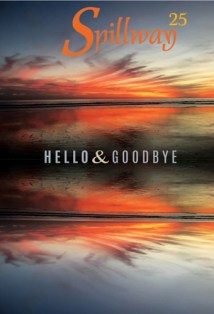
spillway25

This year’s issue of Tebot Bach’s poetry journal Spillway has recently come out, and it includes a poem by yours truly: “The Magician’s Retirement Speech.” It’s quite an honor to see my work alongside the likes of Ilya Kaminsky, David St. John, and the late Chana Bloch.

Special thanks to outgoing editor Susan Terris, and congratulations to my fellow contributors!

Spillway 25 is available for purchase from their website.

A Top 5 List: Modern Poetry Classics

Shanah McCready, known to the Internet as the Bionic Book Worm, organizes a series of book-related Top 5 lists every Tuesday. This week’s theme is “modern classics,” which is quite a broad topic, and an inherently speculative one. After all, who knows what future generations of writers and readers will latch onto? I doubt anyone thought Theodore Dreiser’s Sister Carrie, for example, would cast such a long shadow on American literature.

The doubt involved in making a list of “modern classics” is doubly present when it comes to poetry. Given how vanishingly rare it is for a contemporary poet to achieve broad recognition in the literary community, let alone the general reading public, picking any collection as a potential staple of future reading lists seems, shall we say, hopeful.

But I shall remain hopeful. As such, I’ve decided to put poetry front and center on this list. Here are five poetry collections released since 2000, listed in order of release, which at the very least ought to be considered modern classics.

Sleeping with the Dictionary

1) Harryette Mullen, Sleeping with the Dictionary
University of California Press, 2002
Links: publisher | Amazon

I’ve lost track of how often I’ve pressed this book under the weight of the photocopier, curious to see how students will react to Mullen’s plays on form. This is a collection that turns “Goldilocks and the Three Bears” into a police blotter (“European Folk Tale Variant”), a courting ritual into a litany of tongue-twisters (“Any Lit”), and Shakespeare’s Sonnet 130 into a paranoid rant about the Walt Disney Company (“Variation on a Theme Park”). Mullen takes the diction and rhetoric we take for granted everyday and puts it through the grinder, showing how meaningless (or meaningful!) it is at base. It’s a collection I’m not sure I will ever full-heartedly love, but it’s one I will always deeply respect.


Sea of Faith2) John Brehm, Sea of Faith
University of Wisconsin Press, 2004
Links: publisher | Amazon

Whereas Sleeping with the Dictionary is a book that always inspires me to think about writing, John Brehm’s Sea of Faith in one that inspires me to actually write. Nearly every poem in the collection is one I wish I could have written, because Brehm’s an expert at converting raw sensory inputs into polished works. Take “Coney Island,” which piles one overwhelming detail on top of another, to the point where I believe that “we’ll actually / get on a rollercoaster / just to calm ourselves down.” For another: “Sound Check, Lower Manhattan,” which finds the profundity beneath what sounds like  “[j]ust a jumble of songs and jackhammers and / roaring garbage trucks.” Sea of Faith is probably my most obscure pick, which is a great shame. It deserves a wider audience.


Blood Dazzler

3) Patricia Smith, Blood Dazzler
Coffee House, 2008
Links: publisher | Amazon

An unfortunately timely choice, Patricia Smith’s collection of poems about Hurricane Katrina is a poignant and inventive account of that storm’s particular devastation. Smith both employs a wide variety of forms (free verse, sestinas, abecedarians, etc) and inhabits a number of personas (politicians, residents, even the storm itself) to get the full scope of the tragedy across to the reader. If nothing else, you should listen to some of Smith’s readings on the Poetry Foundation website, which brutally highlight the sound-play at work, especially with regards to the poem “Katrina”: “I was bitch-monikered, hipped, I hefted / a whip rain, a swirling sheet of grit.”


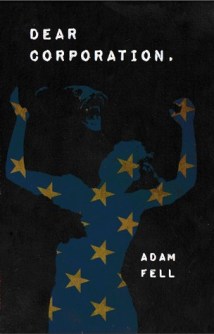
Dear Corporation,4) Adam Fell, Dear Corporation,
H_NGM_N, 2014
Links: publisher | Amazon

Inspired by the United States Supreme Court ruling Citizens United v. FEC, Adam Fell’s prose poems addressed to the person Corporation burn with confused rage and raging confusion; as one of the letters begins, “I don’t know how to say how I feel politely, or poetically.” Despite, or perhaps because of, the collection’s political origins, each letter is also a deeply personal statement; the mere thought of the speaker reaching out to Corporation, of all persons, for solace is heart-rending. And as with Smith, Fell is an excellent reader of his own work. If you can find a recording or see him read in person, do so.


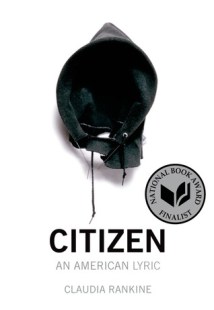
Citizen5) Claudia Rankine, Citizen: An American Lyric
Graywolf, 2014
Links: publisher | Amazon

If you follow poetry, then you knew this one was coming. A multimedia meditation on race in modern America, Claudia Rankine’s Citizen: An American Lyric proved relevant to the broader literary conversation in a way that so few poetry collections are able to today. That alone would almost guarantee it a spot on any list of classics; that these reflections are so sharp only puts it over the top. Seriously, the decision to cast John McEnroe as a Greek chorus in the essay on Serena Williams is absolutely brilliant (and given recent happenings, strangely prescient). To quote the book’s final line: “It was a lesson.” Indeed, indeed.

So there’s my list. What do you think? Are there any poetry collections released this century that you would have included? Let me know in the comments.

The Poetry of Anticipation: On Edward Mullany’s Syntax

In her book The Art of Syntax (Graywolf Press, 2009), the poet Ellen Bryant Voight places special emphasis on a linguistic concept that she calls the “fundament,” which is the unsubordinated subject and predicate of a sentence. Whenever we read a sentence containing a subordinate clause, such as the one that you are currently reading, we instinctively look for the main noun-verb combo to ground us. That is, after all, the fundamental part of the sentence. Only when we arrive at that particular phrase can we be sure of the sentence’s primary meaning. “To say…that a sentence provides a complete thought,” writes Voight, “is actually to say it resolves the brain’s search for the fundament” (p. 6).

You might think of that search for the fundament as a source of tension in a sentence, one which the fundament itself will relieve. Many poems feature sentences which deliberately delay the fundament to exploit that tension, to place the reader in a state of anticipation that is only satisfied at the poet’s chosen moment.

This strategic delaying of the fundament shows up repeatedly in Edward Mullany’s collection of short poems, If I Falter at the Gallows (Publishing Genius, 2011). Indeed, the ideas of anticipation and incompleteness runs through the book from beginning to end. The title not only suggests an upcoming demise, but also takes the form of a subordinate clause in search of a fundament. To scan the cover art from left-to-right involves moving over an expanse of empty, white space between the silhouettes, breaking the implied image into two discrete sections. A good number of poems feel like premises that lack conclusions, or even vice versa.

Mullany’s syntax is no different; his one sentence poems often delay the main clause until near the end for maximum impact. But what I find most compelling in Mullany’s syntax is how it wrings extra tension out of the fundament even after the reader has discovered it. I’ll look at two such poems to demonstrate.

The first poem is “Widowed,” which originally appeared in the now-defunct literary magazine Keyhole. The first three lines consist of a long abverbial phrase, a sure sign that the fundament is being delayed: “During the previews for a movie / that was playing on a weekday / afternoon in a mall in a small town” (lines 1-3). This clause does a lot to set the scene for the poem, giving us time and location as context for the main action. There’s a fair amount of branching syntax here as well, which slows down the pace: a relative clause, some prepositional phrases. The reader is ready to know what happened at these previews. They will find out, but in due time.

The next line introduces the first half of the fundament, the subject: “a man” (line 4). But the fundament has only been started, not completed, for the speaker inserts two relative clauses to expand on the subject: “who’d entered the theater / alone, and who’d been unsurprised / to find himself still alone” (lines 4-6). Because these relative clauses are in the past perfect, placing the actions they described at some point before the previews started, the reader is in some sense further from the main point of the sentence than they were just a few lines ago.

Just when the reader might be growing frustrated with the poem’s syntax, the speaker finishes off a line with what looks like the second half of the fundament, the main verb phrase: “got up” (line 6). The whole sentence up to this point is an elaborate way of saying, “The man got up.” We of course have the context which makes the poem more interesting than that. But those four words are the core of the thought.

Except, the predicate doesn’t end with “got up.” It’s not even the predicate’s only main verb phrase, because the next line coordinates it with a second: “and went out to the lobby” (line 7). If anything, “went out” is the dominant verb phrase of the sentence, because the poem immediately tacks on two more phrases parallel to it: “and out / through the front doors and out into / the bright light” (lines 7-9). In the same way that getting up is a prelude to the real action, the phrase “got up” proved to be a prelude to the “real” predicate.

The second poem I’ll consider, “The Not So Simple Truth,” goes a step further than “Widowed,” in that it delays not just the fundament of the sentence but the sentence itself. The first lines of this poem are a series of sentence fragments:

Potatoes. Dirt and
water. And a soft

towel left for us while
we shower. (1-4)

The reader is presented with a list of items, with no guarantee that a predicate will ever appear (although the “and” which starts the third fragment does suggest the list is concluding). The fact that this list will function as the subject of the poem’s one grammatical sentence only becomes apparent from the next two words: “These // things” (4-5).

Already we see how Mullany uses punctuation to delay delivering the subject. One could easily rewrite the sentence with more standard punctuation, for example with a colon: “Potatoes, dirt, water, and a soft towel left for us while we shower: these things…” It’s not necessarily elegant, but it is grammatical. Yet Mullany uses periods, rather than serial commas, to separate items. The reader must first consider each item as a discrete item, rather than as part of a collective grouping that the above rewriting might suggest.

“These // things” gives us the subject’s noun phrase. The predicate’s verb phrase follows immediately. The main verb is “are” (5), but that’s as nondescript a verb as one can have. We technically have the fundament, in that we have the head of the predicate phrase, but not the satisfaction it provides. “Are what?” the reader must ask. The sentence responds: “no / truer” (5-6). The topic of the sentence is becoming clearer: the “truth,” in whatever sense, of the aforementioned things. However, the word “truer” is a comparative, which implies a point of comparison. One mystery solved, another presented.

Instead of simply providing us with that point of comparison, the poem first mentions the grounds of that comparison: “for their // plainness” (6-7). This phrase is useful for understanding the predicate, in that we’d like to know what the speaker means by “truth.” But the phrase also returns us to “these things,” encouraging us to see the items as plain. (Easy with the potatoes, perhaps a challenge for the soft towel.) When one might expect the poem to move forward through the predicate, it instead cycles back to the subject.

What does such backward-looking move achieve? I’d call it a mental smash-cut. The reader’s mind has just reproduced the starting images when the poem finishes by throwing on several new ones: “than peas / or pus or leprosy” (7-8). Finally, the point of comparison arrives. While the peas might not be so different from the potatoes, the diseased imagery of the final line represents a sharp break from the rest of the poem and its quotidian objects. The reader, anticipating mere completion, receives a broken-skinned punch.

The takeaway for your poetry: consider the holding back the fundament of a sentence, letting the reader anticipate the next move. You might, as in “Widowed,” use that delay to weave in context or show a character’s thought process. You might, as in “The Not So Simple Truth,” decide it best serves to set-up a punchy ending. Whatever the case, the reader will thank you for making the wait worthwhile.


A Poet of the People: François Villon in “If I Were King”

The original, 1855 edition of Walt Whitman’s Leaves of Grass begins with a free-wheeling prose introduction, touching on poetry, philosophy, and the American experience. Among the many topics Whitman covers is the role of poetry and the poet in the world of politics and government. Given his background as a journalist, it is not surprising that Whitman sees the poet as having a role to play in public affairs. He writes:

If peace is the routine out of him speaks the spirit of peace, rich, large, thrifty, building vast and populous cities, encouraging agriculture and the arts and commerce —lighting the study of man, the soul, immortality —federal, state or municipal government, marriage, health, freetrade, intertravel by land and sea . . . nothing too close, nothing too far off . . . the stars not too far off. In war he is the most deadly force of the war. Who recruits him recruits horse and foot . . . he fetches parks of artillery the best that engineer ever knew. If the time becomes slothful and heavy he knows how to arouse it . . .

A lovely sentiment, though in a time when poetry is not so widely read, perhaps difficult to believe. Yet it is so ecstatic in its praise that one cannot help but get caught up in its call to arms.

I found myself thinking back to this passage after watching If I Were King (dir. Frank Lloyd, 1938). The film may be set in 15th-century France rather than the 19th-century United States, but it still recalls Whitman’s vision of the poet in the public sphere. Even more: I think the film offers us another way to understand Whitman’s words.

Adapted from the play and novel of the same name by Justin Huntly McCarthy, If I Were King tells a fictional story about a real-life poet, François Villon. A rogue as well as writer, this film’s version of Villon (played by Ronald Colman) is something of a Robin Hood figure, stealing from the royal storehouses to feed the hungry citizens of Paris. Times are tough in the French city, with a Burgundian siege slowly starving the populace. Meanwhile the king and his court, who have enough food to last them six months, seem oblivious to the conditions on the streets.

Villon finds this state of affairs intolerable, and he will say so to anyone within earshot. This includes, as it turns out, an undercover Louis XI (Basil Rathbone), who has come to Villon’s favorite tavern in search of a traitor, his Grand Constable (John Miljan). Not only does Louis get his man, he also gets an earful from Villon, who takes him for an ordinary tavern-goer. After proposing an ironic toast to Louis (“May the Burgundians take the city away from him—better still, may they take him away from the city”), Villon claims that, given the chance, he would be much better at running the country:

I don’t wish to appear boastful, Brother Long-Nose, but I should think a child of two could do better. Had I been born in a brocaded bed, I might have led armies and served France. As it is you see me here, consorting with cutthroats and wantons and wasting my time with a dull old buzzard like you.

The aristocratic structure of French government greatly limits Villon’s potential power. He cannot be Whitman’s “most deadly force of the war” because he is not of the nobility, from whose ranks the generals are drawn. He can have no soldiers at his command to inspire, no people in the streets to rally to war.

Louis, poking at the poet’s presumption, asks what Villon would do if he, in fact, were king. While Villon mentions enjoying the finest of foods and purging the court of its inept and crooked nobles, his most inspiring proposal concerns how he would connect to his subjects:

VILLON: I’d try to know my subjects. I’d try to earn their devotion and loyalty, instead of their loathing.

LOUIS: By abolishing taxes, I suppose?

VILLON: No! By abolishing despair and substituting hope! I’d learn the longings in their hearts, as a man of the people would, seeing them as they are and admitting that their vices are as deep-rooted as their virtues. I’d treat them as my children, instead of as my enemies. So, by knowing the worst in them, I bring out the best in them.

He would still, as it turns out, be “consorting with cutthroats and wantons,” because those are the people he would be governing. It is somewhat foolish to talk about a democratic spirit to monarchical rule, but Villon’s vision shares at least Whitman’s love of the common people.

Villon soon gets his chance to put that vision into practice. The Grand Constable comes to the tavern, intending to arrest Villon for raiding the storehouses. A skirmish ensues, and Villon kills the Grand Constable, putting Louis in an unusual position: he must punish Villon for killing one of his advisers, and also reward him for killing a traitor. His solution: make Villon the new Grand Constable, and show him that governance is not as easy as it looks.

Indeed, Villon has great difficulty in his new position—but only when he must play by the rules of the aristocracy. Notably, getting the lords to even consider an attack on the Burgundians proves impossible. They do seem overly cautious, given the desperate circumstances. But Villon’s penchant for verbal sparring wins him no friends in the war room. Earlier in film, Villon quipped that “poetry is its own worst enemy,” and here he proves his own point. The nobility aren’t going to stand around and let some poet insult them; they will simply render his words powerless.

No, the poet is far more effective in governance where the common people are concerned. Most obviously, Villon calls on the masses of Paris to counter a charge from the Burgundians, which is what ultimately saves the city from starvation. The people’s surprise success is literally the only thing that convinces the generals to fight. “Who recruits him recruits horse and foot,” indeed.

But even his rhetoric within the court appeals to democratic principles. Consider his message for the Burgundian envoy, who offers the king “an honorable surrender.” Villon’s ode to the people’s strength would hardly seem out of place in Whitman’s preface:

Kings are great in the eyes of their people, but the people are great in the eyes of God, and it is the people of France who are speaking to you now. We are armed and provisioned. We are warm and comfortable behind our strong walls. We laugh at your threats. But, if we who eat were starved, if we who drink were dry, if we who are warm were frozen, our answer would still be the same: ha! We laugh at you, we the people, and the king.

So strong is Villon’s message for the envoy, it seems to win over even Louis, who laughs the envoy out of his court. This victory is short-lived, however; the fateful meeting with the generals follows soon after this scene.

If I Were King may present a rather optimistic view of what poetry can do in the realm of politics. Still, it acknowledges its limits, and in doing so, it helps to refine the praise that Whitman offers in his preface. The power that poets wield is not intrinsic to them. It depends on their audience.