It’s been a while since I’ve done a list of any sort, but with the new year upon us, I think now’s the perfect time for another. This post is part of Top 10 Tuesday, a project currently hosted by Jana, known to the Internet as That Artsy Reader Girl. This week’s theme: the best books we read in 2018.
This year, I’ve noticed a distinct shift in my reading habits. In years past, the great majority of books I’ve read have been thin poetry collections, with a smattering of prose works to balance things out. This year, the ratio has more or less reversed, for reasons that I’ve previously detailed on this blog. So, in case you’re wondering why someone who writes about poetry so often doesn’t have more poetry on his best-of list, there’s your explanation.
Before we get to the list, two honorable mentions that I’ve chosen to exclude from the list for potential conflicts of interest: Alice McDermott’s 2017 novel The Ninth Hour (she was a professor at Johns Hopkins while I was a grad student there) and Nausheen Eusuf’s 2017 poetry collection Not Elegy, But Eros (I was paid to review her book for The Hopkins Review, and afterwards very briefly corresponded with the author). Both books come highly recommended, but there’s your disclaimer.
And with that out of the way, the list proper:

10) Plunge, by Alice Jones (2012)
When it comes to poetry collections, I often find formal experiments to be more memorable than the content of the poems themselves. Such is the case for Alice Jones’s Plunge. Jones is of course capable of crafting a striking image or allowing the language to carry the reader on its music. But what has stayed with me over the past year is the structural conceit. Each poem is an incremental series of smaller pieces, starting with a haiku and building toward a sestina (or vice versa), with certain key words repeated and recontextualized in every iteration. My favorite of the collection, “Valle d’Aosta,” perfectly summarizes Jones’s strategy: “Before we ever saw mountains / we imagined them, heaps of gravel and snow, islands / floating above all we knew.” It’s far from the best collection I’ve ever read, but it’s among the most I’m eager to imitate.
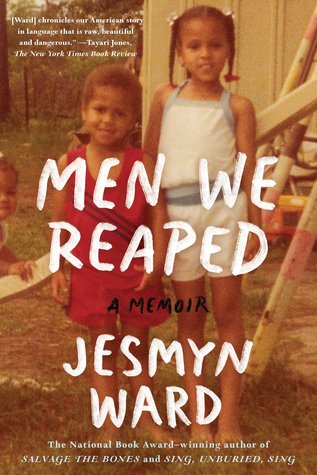
9) Men We Reaped, by Jesmyn Ward (2013)
Equal parts memoir and memorial, Jesmyn Ward’s account of the deaths of five young black men from her hometown takes a little while to find its footing. The narrative alternates between Ward’s own story and the five deaths that touched her life, with the memorial segments told in reverse chronological order, it’s a bit of a struggle to settle into the world of DeLisle, Mississippi. But once the reader gets accustomed to the narrative flow, Ward’s powers of description prove devastating, especially as the book begins to circle the first and final death, that of Ward’s younger brother Joshua. Yet through all the heartache and tragedy, Ward finds a way to press on. “We love each other fiercely,” she writes near the very end, “while we live and after we die. We survive; we are savages.” I’m looking forward to diving into Ward’s fiction in the coming months; I want to see her powers of lyricism and imagination really shine independent of the facts.
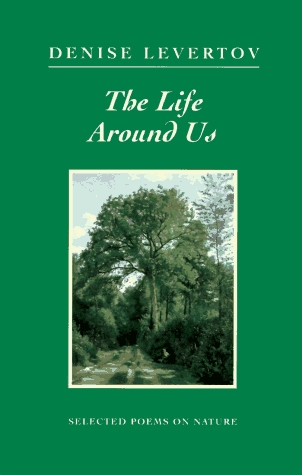
8) The Life Around Us: Selected Poems on Nature, by Denise Levertov (1997)
Conventional wisdom holds that love and death are the two most difficult subjects to write good poems about, but I’d personally add nature to that list. Handled poorly and a nature poem is just a pedestrian landscape rendered in language, or else a polemic without any craft. What makes Denise Levertov’s poetry so delightful is the variety of ways she has of approaching the natural world, whether it’s placing uranium mines in the context of colonialism in “What It Could Be” or turning “The Cabbage Field” into a painterly, almost surreal portrait of the sea. This collection would be much higher on the list if not for one baffling editorial decision: the last third of book is dedicated to nothing but descriptions of mountains, and it’s stunning how quickly the book becomes a slog in the home stretch. Had that proverbial mountain range been broken up and spread out, this would probably crack my top three.
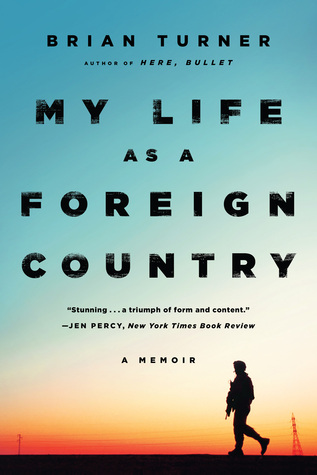
7) My Life as a Foreign Country, by Brian Turner (2015)
Brian Turner first came to the attention of the literary world with Here, Bullet, a collection of poems inspired by his time as an American soldier in the Iraq War. It comes as no surprise, then, that his memoir of overseas service, My Life as a Foreign Country, functions as poetry in multiple senses: lyrical language, fragmentary progressions of ideas, and associative leaps between the different threads of the narrative. As with Men We Reaped, this book takes some getting used to, both with its structure and its content. Turner’s recollections are often stomach-churning and infuriating, as any response to war is bound to be, and what makes his account especially gripping is how far the effects of war spread. It colors Turner’s family, his life after returning home, and even his past: there’s a memorable sequence from his childhood where he and his friends make a war film, and the presentation of their backyard fun becomes unnervingly graphic. This is really the only book on this list that I “hyped” myself for, and in the end it surpassed (and circumvented) my expectations.
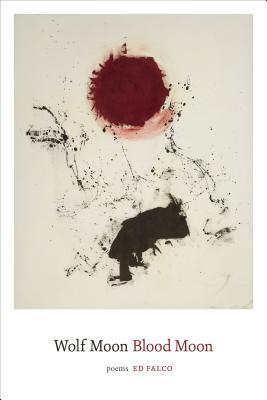
6) Wolf Moon, Blood Moon, by Edward Falco (2017)
When I write about poems, I usually find myself thinking about the poetic argument, the idea or narrative that the writer wishes to get across as the poem unfolds. This approach, granted, risks treating poetry as essay writing rather than on its own terms, but Ed Falco’s Wolf Moon, Blood Moon is bold enough to embrace this approach. The pieces in this collection present themselves as essays aaddressing large topics, from grief to quantum theory, but along the way their whirlwinds sweep up the intimate details which mark successful poems. “On Language,” for instance, begins with the prosaic notion that “[t]he words we use to instill a sense of the ineffable / Carry us on a journey that’s mysterious,” only to use that thesis to frame a boy’s evolving relationship with his aging father. There were moments reading Falco’s work that made me feel how I did when I first read the later poems of Larry Levis, which coming from me is high praise indeed. Falco is primarily a novelist, but I sincerely hope that he returns to poetry in the future.
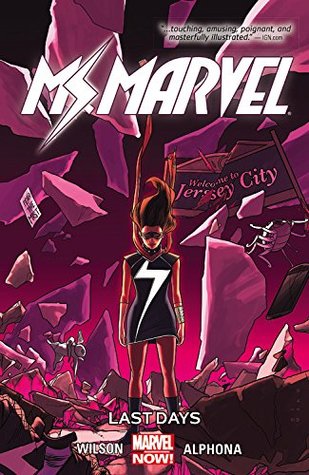
5) Ms. Marvel, Vol. 4: Last Days, by G. Willow Wilson and Adrian Alphona (2015)
Kamala Khan’s position as a (diegetically) marginal figure within the Marvel universe comes to a head in Last Days, as the world appears to be on the cusp of ending and the fate of Jersey City looks like an afterthought next to that of New York. Yet it’s in that milieu of hopelessness that everyone’s humanity bursts through most clearly. Kamala’s inevitable team-up with her idol Carol Danvers naturally takes center stage, but it’s her conversations with her mother and brother that make this collection an aesthetically fulfilling experience. And while I’m in no way qualified to discuss visual art, Adrian Alphona’s artwork throughout sells the characters’ emotions and the mood of the world just as much as G. Willow Wilson’s dialogue. Had the world in fact ended for Kamala and company, I couldn’t have asked for a more satisfying conclusion to the story.

4) Proxies: Essays Near Knowing, by Brian Blanchfield (2016)
Here’s a book that I admired enough to write a 2400-word blog post about it while imitating its style. Brian Blanchfield effortlessly manages to blend the abstract and the erudite with the grounded and the intimate. A series of self-searching essays which rely solely on Blanchfield’s memory as a reference for all facts, Proxies is a book which imbue supreme power in words as words, for they are his only certain path to understanding. It is much easier, for instance, for the author to confront how he left (abandoned?) his teaching position at a Massachusetts boarding school if he first interrogates what it means “to withdraw”: “To withdraw—when it doesn’t take an object, like: an offer, or a question, or the troops—to withdraw, as an intransitive verb, is, as it happens, always reflexive. If I withdraw, I withdraw myself. From what?” Proxies is a book that teaches us through example that before we can even hope to sort out our lives’ decisions, we have to figure out what the questions even are.

3) The Amazing Adventures of Kavalier and Clay, by Michael Chabon (2000)
This is the part of the list where I start praising books that don’t need anyone else’s endorsement, but to hell with it—I love these books. First up is Michael Chabon’s most beloved novel, the story of a Jewish-American duo in the golden age of superhero comics. Sam Clay and Joseph Kavalier’s friendship and art perseveres through business hardships, through anti-Semitic sentiments, through war, and it’s one of the most touching relationships that I’ve read about in a long time. The Amazing Adventures of Kavalier and Clay is also miraculous in its structure, a modern 600-page novel that feels epic but is never sprawling; by the time I closed the covers on it, I only wanted to cut about 50 pages from its length. (Normally, that number is closer to 300.) Even when he’s indulging himself with an extended digression on comic book history, Chabon never loses sight of the novel’s focus, its richly developed characters.

2) Homage to Catalonia, by George Orwell (1938)
Earlier this year, when I wrote about the use of dark comedy in George Orwell’s Homage to Catalonia, I said that the author’s ability to “find humor in such dire circumstances feels like a testament to human freedom.” The more I think about the book, the more that sentiment rings true for me. Homage to Catalonia is a despairing book, make no mistake. To see how the Communists sold out the leftist cause in the Spanish Civil War to help put the Fascists in power is enough to put a permanent hole in the reader’s heart. Yet months after reading it, I find myself thinking back to Orwell’s time in the P.O.U.M. camp, and the sense of wholly equal comradeship that existed—nay, thrived —in the early days of the conflict, and that tells me that Orwell’s account is no mere exercise in hopelessness. Eighty years after its initial publication, Homage to Catalonia remains vital, and I really mean that in every sense of the word.
1) Middlemarch, by George Eliot (1871-1872)
Between this book and Silas Marner, I’ve come to the conclusion that George Eliot is the most precise observer of human behavior to ever set pen to paper. A depiction of life in a provincial English town circa 1830, Middlemarch has more memorable and fleshed out characters than I could ever hope to discuss coherently. From the emotionally distant and impossibly verbose Casaubon, who wouldn’t feel out of place in a Dickens novel; to the charming but underhanded Rosamond, who is so adept at justifying her secret schemes that one starts halfway siding with her; to Chettam, the Platonic ideal of an elitist jerk. And at the center of it all, we have Lydgate, as brilliant at medicine as he is inept at managing social connections, and Dorothea, a woman so moral and self-sacrificing yet internally conflicted that I’m tempted to call her my new favorite protagonist—except to do so would mean reducing the novel to Dorothea’s story. No, Middlemarch has far more to offer, far more it wishes to offer, than any summary could ever convey. I only finished this book about two weeks ago, but I’ve put it on top because more than anything thing else that I read this year, this is the book I want to shove into the people’s hands and say, “Read this immediately.” You’ll become a better person for the experience.
There’s my list for you. But what are your thoughts on all this? Have you read any of my favorites from this year? Any books you’ve read this year that you’re dying to share with others? Let me know in the comments! And if you’re looking for more book recommendations, you might want to check out my list of modern poetry classics.
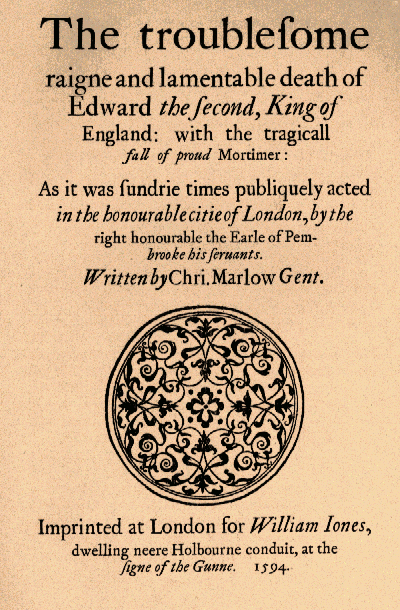 English classes have an odd relationship with early-modern English drama. Shakespeare is all but mandatory as part of the curriculum, but his contemporaries hardly get mentioned, let alone read: none of Ben Jonson’s intricate city comedies, none of Thomas Middleton’s tragic bloodbaths. But I feel Shakespeare’s dominance is especially a shame when it comes to Christopher Marlowe, whose work not only influenced the Bard’s but also matches it in pure, visceral pleasure. Marlowe’s characters are larger than life, always scheming, and elicit viewer sympathy despite their many, many vices.
 There are some writers whose works, while critically lauded and oft-studied at the university level, rarely make their way onto high school reading lists because of their perceived difficulty. I’m thinking of authors such as William Faulkner, Virginia Woolf, and the dean of this odd school, Henry James. Untangling James’s syntax is a true challenge that every student of literature must eventually face, but Washington Square is an exception in his bibliography. Indeed, it reads less like James and more like that mainstay of English classes, Jane Austen. (Apparently this was much to James’s chagrin, but what does he know?)
 One of the best literature courses I took as an undergraduate was called Capital Fictions, which was an exploration of economic themes in late 19th- and early 20th-century American literature. I was tempted to try shoehorning half the syllabus onto this list—ooh, people should actually read The Jungle! ooh, McTeague is a masterpiece of literary naturalism! ooh, “The Tenth of January” is a fantastic short story!—but in the end, I exercised something resembling disciplined and settled on the one book that I found the most eye-opening.
 Don DeLillo writes the accessible sort of “weird” books that I’m certain would have totally blown my mind when I was in high school. White Noise isn’t “funny,” exactly, but there’s a lot in the book to quietly snort at, and unlike, for instance, Thomas Pynchon’s The Crying of Lot 49, one doesn’t need to be well versed in Jacobean revenge tragedies to get the joke. The fact that the protagonist, Jack Gladney, is a leading scholar of Hitler studies (snort) who doesn’t speak a lick of German (snort) is amusing no matter one’s stage of cultural awareness.
 Poetry tends to get short shrift in English classes, with maybe a few weeks dedicated to the entire tradition. A Brit lit class might touch on the Romantics, an American lit class on Whitman and Dickinson, but not much beyond that. Still, most students graduate with at least some understanding of what a sonnet is, or at least an understanding that they exist and that Shakespeare wrote a whole bunch of them. The sonnet has proven to be an enduring form, and if anyone’s work demonstrates the power of a well-turned sonnet, then it’s Edna St. Vincent Millay.
 Of course, what high school English classes really need is more contemporary poetry, and by “contemporary,” I mean “anyone after Robert Frost.” Students come away from their secondary education with the notion that poetry is a dead art that only deals with archaic subject matter and must sound like the mad ravings of a pantalooned troubadour. And, to be sure, a lot of contemporary poetry is unintelligible to the uninitiated reader. But just as much is plain-spoken, personal, and relevant to the world outside academia, like the work of Yusef Komunyakaa.
 To round out this accidental trio of poetry collections, here’s a book that straddles the line between Millay’s formalist magic and Komunyakaa’s deeply detailed free verse. Rita Dove’s Mother Love is a long sequence of loose sonnets, and part of the fun of reading it is figuring out which aspects of the tradition (length, rhyme, meter, subject, volta) is Dove employing in a given poem and which she is ignoring. In purely practical terms, it’s a great way to gauge students’ understanding of the tradition’s formal requirements.
 When I was first composing this list, I thought about including some more works of history, such as Stephen Schlesinger and Stephen Kinzer’s Bitter Fruit or John W. Dower’s Embracing Defeat. But while books like those cover topics which often go undiscussed in high school history classes (the CIA-backed coup in Guatemala, post-WWII Japan), as texts they tend to be dry and rather conventional. The material that these writers tackle is vital to understand, but their particular expression is not necessarily as compelling.
 Before, I said that poetry needed more presence in high school curricula, but short stories could probably make the same claim. At least in my experience, short stories were either used as supplementary material for a novel (like reading Kate Chopin’s “The Story of an Hour” alongside The Awakening), or as a means of chewing up class time after hitting all the syllabus material. And as for contemporary short stories, the sort that would fill out an issue of The New Yorker, well, those simply didn’t exist; I didn’t realize people still wrote short stories until undergrad. So why not at least give students some Alice Munro to chew over?
 I fear this list has become too academic, so let’s close things out with a book that’s a bit more fun. I’ve raved about Brenda Shaughnessy a couple of times on this blog before (e.g.,
  Michael Mingo's Blog