Charlotte Smith’s “Written in the Church Yard at Middleton in Sussex”: An Analysis

Charlotte SmithLet’s take a deep dive into a poem, shall we?

I first became aware of Charlotte Smith’s poetry during the first semester of my MFA, when, for reasons I won’t bore you with, I had to recite her “Ode to Death” for workshop. I distinctly remember its accepting attitude towards its subject—not quite Dickinson’s friendly relationship with it in “[Because I could not stop for death],” but still cordial, curious even.

Recently I decided to look through more of her work, and lo and behold, the first of her poems in The Norton Anthology of Poetry deals with a similar theme:

“Written in the Church Yard at Middleton in Sussex”

Pressed by the moon, mute arbitress of tides,
While the long equinox its power combines,
The sea no more its swelling surge confines,
But o’er the shrinking land sublimely rides.
The wild blast, rising from the western cave,
Drives the huge billows from their heaving bed,
Tears from their grassy tombs the village dead,
And breaks the silent sabbath of the grave.
With shells and seaweed mingled, on the shore
Lo! their bones whiten in the frequent wave;
But vain to them the winds and waters rave;
They hear the warring elements no more:
While I am doomed, by life’s long storm oppressed,
To gaze with envy on their gloomy rest.

There’s a lot we can, and will, talk about here, but this being a sonnet, why don’t we start with the turn in the final couplet?

The ending of this poem is somewhat odd, even unsettling. After three quatrains of detached observations of a coastal graveyard, the speaker turns to her own, morbid concerns: she is “doomed” to “envy…their gloomy rest.” Not only is this turn emotionally dispiriting, but it also seems to rest on a false premise: what “gloomy rest” is there in this graveyard?

In “The Sonnets of Charlotte Smith” (published in Critical Survey 4.1, pp. 9-21, 1992), Stella Brooks focuses on the poem’s diction to get to the heart of the apparent contradiction. Although the speaker

longs for their oblivion for herself…the preceding violation of the “silent sabbath” of the graves, the shock of the “village dead” being “torn” from their tombs by the “huge billows,” the “raving” of the “winds and waters” have suggested anything but the claimed oblivion; the graves have been disturbed, there is no “gloomy rest” for their inmates. (p. 14)

Of course, Brooks does not see this discrepancy between the speaker’s description of the graveyard and her interpretation of it as a flaw in the poem. Rather, that discrepancy is emblematic of a “turbulent Romantic fantasy” (p. 14). The speaker has a need to express her heightened emotions, in spite of the constraints placed upon her.

I’d like to push Brooks’ reading a bit further, for the poem strains against more than just the facts of the case. The formal elements of a poem, after all, are another kind of constraint. In case of this sonnet, elements that would ordinarily suggest calm and composure in fact hold back an uncontrolled force of emotion.

To start, let’s continue talking about endings: line-endings. A quick glance reveals that of the sonnet’s 14 lines, 13 of them end with some form of punctuation, from the brief pause of a comma to the heavy stop of a period. End-paused lines are famous for slowing the pace at which one reads a poem, as they represent both the end of a unit of syntax (a phrase or a clause) and a unit of verse (a line). Further, when end-paused lines occur with such regularity, they give the poem another measured music in addition to the meter (more on which later).

There’s only one line in Smith’s sonnet, line 9, which lacks end-pausing punctuation, and naturally this moment represents a turning point in the poem: “on the shore / Lo! their bones whiten”. It’s an awkward line-ending, as the next line all but starts with terminal punctuation, with that exclamation point coming just one syllable in. The poem’s rhythm staggers right as the speaker confronts the full extent of the graveyard’s damage. The speaker has mentioned how the sea has degraded the graveyard prior to this, but those descriptions tend towards abstraction: “village dead,” “the silent sabbath of the grave.” Here, though, death is rendered concrete: whitened bones “with shells and seaweed mingled.”

Now, line 9 may be the point where the poem’s composure completely dissolves, but Smith has been building up to this moment throughout the first two quatrains.  The apparent calm in the lead-up is illusory. For one thing, the sound-play in the first eight lines is incredibly emphatic. The first two rhymes are on the similar-sounding [aɪdz] (“tides”/”rides”) and [aɪnz] (“combines”/”confines”), with either sound amplifying the other. Internally, the lines are super-charged with repeated sounds: “Pressed”/”arbitress” and “moon”/”mute” in line 1, the double alliteration of “huge billows” and “heaving bed” in line 5, the sibilance of “breaks the silent sabbath” in line 8, and so forth.

It’s difficult to read this poem aloud without feeling a bit pompous, the sound-play is so heavy and the lines so measured. One imagines Smith declaiming this piece to the decay before her, arms raised to the heavens like a capital-R Romantic heroine, trying to convey her emotions to the spirits. But behind all that power, there’s also strain, and that strain comes through in the poem’s meter.

The first quatrain scans pretty regularly for a sonnet, with no line straying too far from iambic pentameter. Line 1 has an authoritative initial trochee (“Pressed by | the moon…”) and line 2 starts with a double iamb (“While the | loud e | quinox…”), but beyond those two substitutions, it’s four lines of forceful iambs. (Even if we give “power” its modern two-syllable scansion, the stresses stay on the same syllables in the line; the anapest changes very little.) What’s more, the stresses keeps accentuating words relating to strength: “pressed,” “loud,” “power” “swelling surge.”  If not for the rhyme, I could almost see King Lear reciting these lines on the stormy heath.

But the second quatrain does not scan so easily. Consider lines 5 and 6:

The wild blast, rising from the western cave,
Drives the huge billows from their heaving bed

Forcing these lines to fit the mold of iambic pentameter is a challenge. The mid-line comma and the possibility of pronouncing “wild” as two syllables suggest we scan the first three words as two iambs (“The wi | ld blast“). The rest of line 5, meanwhile, has a fairly intuitive cadence: “ris | ing from | the wes | tern cave.” Putting both parts together, though, we end up with six stresses instead of five. We can either demote “from” to an unstressed syllable, which maintains the semantic emphases but producing an ungainly scansion (“The wi | ld blastrising | from the wes|tern cave“), or we can elide “wild” into one syllable and demote either it or “blast,” which makes for a better-scanning line but is unsatisfying semantically. Who says “wild” or “blast” weakly?

Line 6 presents a similar problem, with a natural reading producing a six-stress line. Demoting “from,” as it did before, makes for an even worse scansion than before: “Drives the | huge bil | lows from | their hea | ving bed.” The other option, demoting “drives” or “huge,” as it did before, forces us to de-emphasize a strength-related word, exactly what the poem encouraged us to do in the first quatrain. Gone are the forceful declamations; uncertainty now reigns. The poem may get back on song in the next two lines, with just the initial trochee in line 7, but it does so just in time for the bodies to start surfacing.

All of the above may be interesting, but how does it factor in to the poem’s conclusion? Well, it justifies how the speaker could possibly see “gloomy rest” in this scene. The disturbed dead are numb to the chaos around them, unable “to hear the warring elements.” But more than that, the dead cannot think or feel, whereas the speaker is compelled to contemplate their fate, with all that loud language and emotion discussed above bouncing about in her head. The one thing someone in such a position could envy is quiet. But in the Romantic world of Smith’s poetry, that is impossible. The speaker can only “gaze with envy” at the possibility.

To end on a (slightly) cheerier note: Lit Brick has an amusing summation of the poem in webcomic form, so enjoy that!

What do you think of Smith’s sonnet? Have any suggestions for more classic poems to dissect? Feel free to share in the comments.
Four Fragments on Nothing

Let me take you back, briefly, to late 2010.

My 12th-grade AP English teacher, Mr. LoGiudice, is out of school for reasons I can’t remember now, but he told us the day before he’d be absent. He’s left the substitute with a prompt that we’re to spend the entire period writing about. We just finished the unit on Shakespeare, so I’m expecting something related to Bard.

The substitute grabs a piece of chalk and, with a slightly confused manner about her, writes the prompt on the board, which I quote now in full:

Nothing.

There’s some laughter around the room, with a bit of disbelief mixed in. Who can possibly take this prompt seriously? Who can write an essay, even an awful SAT-style essay, on “nothing”? So I’m not sure anyone does. Certainly I don’t.

By this point in my life I have fancied myself a poet, by which I mean I like writing ballad-esque song lyrics and have been reading The Complete Idiot’s Guide to Poetry. As such, I decide to write a poem on nothing, a poem that interrogates the very concept of nothing.

It is, in something approaching an irony, the longest poem I have ever written up to this point: two pages written out, split into four sections. (That’s not actually very long, but I tend to cap out around 20-30 lines.) I throw in every approach to nothing I can think of. Allusions to Seinfeld, that show about nothing. Quotes from King Lear, where we’re admonished: “Nothing will come of nothing. Speak again.” The brains of politicians, because nothing is easier than mocking politicians.

I turn it in. I feel good about it. I go on to include it in at least one of my college applications. And for the longest time, I think no more of it.

*     *     *

Now, the purpose of that prompt in the context of the class was to introduce the unit on existentialism and absurdism, on the search for meaning in a universe that has none. It was a way of transitioning us from Shakespeare to Sartre, from Edgar and Edmund to Vladimir and Estragon. We never, so far as I can recall, discussed what we wrote the day Mr. LoGiudice was absent.

Yet I feel that little poem I wrote must have had some impact on me, because “nothing” keeps popping up in my work. “Nothing” grows in the fields. Magicians hide “nothing” up their sleeves. I speak of “a thunderclap / that releases nothing.” There is “nothing” to be concerned about.

One construction, in particular, I’ve discovered I’m fond of: “nothing but.” It’s a curious phrase, highlighting the object being named by denying the reality of all other objects. It’s so brazen an approach that it always carries an air of absurdity. It also lends itself to undermining itself. One of my published poems, “Rural Sound Check,” begins like this:

Nothing but pebbles sliding
under my sneakers, nothing
but groundhogs and garter snakes
darting through leaves on the roadside…

These two phrases cannot be true simultaneously; each denies the other. The implication must be that what the speaker initially believes to be nothing is, in fact, something, many things even.

Compare that to John Brehm’s poem “Sound Check, Rural Manhattan,” which directly inspired mine. His begins not with a “Nothing but…,” but a “Just…”: “Just a jumble of songs and jackhammers and / roaring garbage trucks…” Brehm’s speaker does not necessarily deny the existence of other sounds, merely their apparent significance. It is, perhaps, a more honest and nuanced way to approach his subject than I take. After all, when you begin as nihilist, there’s only one direction to go.

*     *     *

In The Wilds of Poetry: Adventures of Mind and Landscape, David Hinton describes the poetry of Gustaf Sobin like so:

A Sobin poem opens a “talk of mysteries,” a force field of wonder and query and unknowing. It begins somewhere already in process (often marked by ellipses), as if its beginnings were lost, thereby suffusing itself in silent/unsayable origin. It is often fragmentary, or otherwise fully of empty interstice. The language is always provisional, decontextualized, conditional, incomplete, full of words like as if, might, would, could. It revels in a vocabulary of vanishing: vestige, relic, obfuscated, elision, obliterated, nothing, extinguished, dismantled, empty, dissolving, invisible, illegible, abolished, nothing. (p. 290)

I’m not sure why Hinton feels the need to list the word “nothing” twice, but it illustrates the difficulty in writing about that which is mysterious or absent: we lack a good vocabulary for it. We end up speaking in negations (nothing, invisible, illegible) or in terms of destruction (dismantledabolished), rather than the continuous, affirmative presence that we might mean.

Granted, a creative poet can find ways around this problem of language. Sobin, for example, uses the power of the line-break to separate the prefix from the base word, allowing the word and its negation to exist simultaneously. One can see this in the poem “Languedoc,” with the phrase “that thin / il- / legible tremor” (lines 19-21). The tremor’s illegibility is made its most legible trait, rather than a problem we have in perceiving it.

But more often than not, in attempting to describe that which we call nothing, we’re left with abstraction, reiteration, and frustration. We may, after a time, feel like Prufrock: “That is not what I meant at all; / That is not it, at all.” Or, again, like Prufrock: “That is not it at all; / That is not what I meant, at all.”

*     *     *

I must confront the possibility that this post is a way of intellectualizing a personal fear of mine: have I nothing to say? Are my poems merely an excuse to string sounds and images together, with no recognizable end? Or do I have a subject, but lack the language to even think it, let alone record it?

A word I now realize is missing from Hinton’s analysis of Sobin: “doubt.” Why speak in a manner “provisional, decontextualized, conditional, incomplete,” why lead a poem with an “as if” or a “just,” why dismissively call these reflections “fragments,” why speak of “nothing” in the first place—if there is nothing to doubt?

A Top 5 List: Most Read Authors

Here’s another post inspired by a prompt from Shanah “The Bionic Bookworm” McCready: Top 5 Most Read Authors. This seems like a simple, objective list to compile: just check Goodreads and read off the results, right? Well, that will produce a list, and it is the list I went with. But there might be some wrinkles to it.

For example, I’ve a read number of omnibus collections of an author’s work, such as the complete poems of Rita Dove, Marianne Moore, and James Wright. Goodreads will count those as one book, even if they are really several individual books printed together. In absolute terms I’ve probably read more of Rita Dove than I have of some authors on this list. Yet there is something to be said about picking up a whole other volume from an author, reading more of their work with intent and not just because it happens to continue on the next page.

Moreover, my Goodreads stats only include books I’ve read since joining the site. That’s not a revelation, true, but it means that this list is skewed towards recent years. I know I read a whole bunch of Lemony Snicket and Donald J. Sobol books as a kid, but they’re not making it onto this list. Nor will this list account for re-readings. I’ve read 1984 five or six times by now, but that only gets George Orwell one point.

My point is: this list is not necessarily an accurate picture of my most read authors. But looking at it, it’s a damn fine roster, and if this list turns you on to just one of my favorite writers, then I’ll call it a victory.


Brenda Shaughnessy5) Brenda Shaughnessy
Technically, the No. 5 spot on this list should be a six-way tie, but that would be rather much to condense into one paragraph. So I made an editorial decision and went with my favorite writer of the bunch. I first encountered Shaughnessy’s verse in Our Andromeda (Copper Canyon, 2012), which draws from Tarot cards and cosmic space for its sprawling depictions of motherhood. Her first collection, Interior with Sudden Joy (Farrar, Straus and Giroux, 1999), on the other hand, leans heavily on a choppy but still musical prose rhythm for its pieces. But it was her most recent collection, So Much Synth (Copper Canyon, 2016) that made her a contemporary giant in my heart. Two poems in particular stand out: “A Mix Tape: ‘Don’t You (Forget About Me)’,” which painstakingly details the process of making a mix tape for a crush, and “Is There Something I Should Know?” an epic and absolutely piercing reflection on early adolescence.


Andrew Hudgins4) Andrew Hudgins
At its worst, formal poetry can read as stiff and needlessly antiquated. At its best, well, you get someone like Andrew Hudgins. I first encountered Hudgins’ poetry through his verse autobiography The Glass Hammer: A Southern Childhood (Mariner, 1994), which to this day is still my favorite high-concept collection of poems. Its make great use of received forms to convey a child’s moment-to-moment moods, for example, the boredom-inducing “Gospel Villanelle.” But Hudgins also knows that the creaking rhythms of formal poetry have the power to unsettle. His first collection, Saints and Strangers (Houghton Mifflin, 1985) contains the blank verse piece “Air View of an Industrial Scene,” which ends with the dire line, “We’re watchers. But if we had bombs we’d drop them.” Meanwhile Ecstatic in the Poison (Overlook, 2003) begins with “In,” a common-measure ballad about kids playing in the clouds of pesticide trucks. No matter the form or the subject, Hudgins’ work is sure to prick at your nerves.


Shakespeare3) William Shakespeare
If this list were based on my lifetime reading habits, the Bard would take first place, and it wouldn’t be all that close. Both for classes and for pleasure, I always find myself going back to Shakespeare, and—no surprise here—he keeps getting better and better. I recently re-read Richard II, for example, and found the title character’s eloquence even more pointed and haunting than I’d remembered it. (Seriously, the “hollow crown” speech is my favorite bit from Shakespeare’s whole oeuvre.) The past few years, I’ve aimed to fill in my personal gaps in the Shakespeare canon, so I’ve read a couple of clunkers like Two Gentleman of Verona and Henry VIII. But I’ve also read such hidden gems as Troilus and Cressida, which is so cynical and war-weary you’d think it was the product of the World War I poets. You obviously don’t need me to tell you to read your Shakespeare, but for real: read your Shakespeare.


Larry Levis2) Larry Levis
When I first started taking creative writing classes in undergrad, I quickly realized something: my knowledge of poetry ended at around 1900. In a panic, I dove into the library stacks to fix that, and one poet in particular captivated me: Larry Levis. From the tightly controlled similes found in Wrecking Crew (University of Pittsburgh Press, 1972), to the sweeping, digressive reflections that make up The Widening Spell of the Leaves (University of Pittsburgh Press, 1991), to the stark confrontations with mortality that mark his posthumous collections: Levis’s work is always compelling. While, if I’m honest, my own writing most resembles that of Hudgins’, Levis is the writer here I most wish I could emulate, but simply lack the skill to do so. Who else could take the phrase, “Death blows his little fucking trumpet,” and make it work in not one but two completely different poems?


Ursula K. Le Guin1) Ursula K. Le Guin
Where do I even begin / with Ursula K. Le Guin? Perhaps with the masterful world-building found in her science fiction novels. Perhaps with the introspective tone that characterizes the Earthsea Cycle books. Perhaps with the fact that her mid-2000s Annals of the Western Shore series is literally the only series of books I have ever read in its entirety. Perhaps with her poetry, or her advice on the craft of writing. Not only do I keep going back to Le Guin, I keep going back to her in different genres and contexts. I’ve never read Shakespeare’s narrative poetry, or Levis’s short fiction, but Le Guin? Hell, I’d read a history of sandwich toothpicks if she were the one writing it. For some representative books, I’d check out The Left Hand of Darkness (Ace, 1969), The Tombs of Atuan (Atheneum, 1971, second Earthsea Cycle book), and Voices (Harcourt, 2007, second Annals of the Western Shore book). But start wherever you’d like. You’re in for a treat.

So there’s my Top 5. Does your list have any overlap with mine? Are there any authors here you’ve not read before but would like to check out? Let me know in the comments.

Living Like the Reeds: Aesop and Ammons

Let us begin with a simple image: reeds blowing in the breeze. In the hands of a painter, we have the beginnings of a new landscape. In the hands of a filmmaker, a calm opening shot.

In the hands of a writer, the seeds of a practical philosophy.

Aesop famously uses this image of wind-blown reeds in one of his fables, “The Oak and the Reeds.” As translated by Vernon Jones, the story goes like this:

An Oak that grew on the bank of a river was uprooted by a severe gale of wind, and thrown across the stream. It fell among some Reeds growing by the water, and said to them, “How is it that you, who are so frail and slender, have managed to weather the storm, whereas I, with all my strength, have been torn up by the roots and hurled into the river?” “You were stubborn,” came the reply, “and fought against the storm, which proved stronger than you. But we bow and yield to every breeze, and thus the gale passed harmlessly over our heads.”

The Oak and the Reed

In his introduction to the Barnes & Noble Classics edition of Aesop’s Fables, D. L. Ashliman says that this fable may well be “the capstone to the pragmatic moral philosophy of Aesop” (xxix). Time and again, the fables instruct us to accept our circumstances, whatever they may be, rather than railing against them; examples include “The Ass and His Masters” (“Why wasn’t I content to serve either of my former masters…now I shall come in the end to the tanning vat”) and “The Crab and the Fox” (“I had no business to leave my natural home by the sea…”).

Yet it is “The Oak and the Reeds” that presents Aesop’s brand of pragmatism in its most generally applicable terms. The wind stands in for any obstacle or hardship that one may face, not just one’s station in life. Low or high, weak or strong, everyone encounters a strong gale at some point. The best that one can do, it would seem, is go along with such events, rather than resisting them and breaking down.

Had Aesop not predated them by a good three centuries, I would be tempted to group him with the Stoics, who advised taking a similar approach to hardship. Consider the following passage from the Enchiridion, Epictetus’s manual for Stoic living:

If you are going to bathe, picture to yourself the things which usually happen in the bath: some people splash the water, some push, some use abusive language, and others steal. Thus you will more safely go about this action if you say to yourself, “I will now go bathe, and keep my own mind in a state conformable to nature.” And in the same manner, with regard to every other action. For thus, if any hindrance arises in bathing, you will have it ready to say, “It was not only to bathe that I desired, but to keep my mind in a state conformable to nature; and I will not keep it if I am bothered at things that happen.”

Epictetus’ bather could get worked up regarding the unpleasant behavior of his fellow citizens, could stand as stubborn as the oak. But their actions are outside his control. Better that he accord his will with nature, bending in the breeze like the reeds, and take the behavior of others as a given. He will thus keep his own mind untroubled.

Certainly this is prudent advice. So long as the difficulties concern you and you alone, it is difficult to refute. Indeed, whenever I read the likes of Epictetus or Marcus Aurelius, I find myself wishing I had their cool and dispassionate resolve.

But suppose the breeze is something more than a personal obstacle. Suppose it’s something which affects a large swath of society: an authoritarian government, or systemic injustice. To bend like the reeds, as the Stoics would suggest, may well make an individual’s life more bearable. But it does little for everyone as a collective. One might say that the lives of fellow sufferers are as beyond our control as those of the oppressors, and at any rate we lack the power to actually resist. But I feel that merely rationalizes passivity.

For comparison, let us turn from Ancient Greece to the 20th-century United States. “Small Song,” a short poem by A. R. Ammons, also uses the image of reeds bending in the breeze. In its entirety, it reads:

The reeds give
way to the

wind and give
the wind away.

I plan on doing a full dissection of the poem in a later post, but for now let’s note the difference between Ammons’s and Aesop’s reeds. For the fabulist, the wind acts upon the reeds and not the other way around. Indeed, the reeds only ever act by lecturing the oak for not letting the wind act upon it. For the poet, the apparent passivity of the reeds is in fact an action. Their bending makes it obvious that the wind is present.

What do we make of Ammons’s twist on the reed image? Considered in isolation, it is a pleasing little paradox, a short sentence dense with potential meaning. Considered in the context of Aesop’s fable, though, and one might find a message about resistance. Absorbing the wind’s abuse consequently makes it visible. Think of the specific phrase “give / the wind away.” To be given away, one must be trying to hide something, to sneak it by without notice. Those reeds, because they bend, prevent that from happening.

Sure, when the oak falls to the banks, it does so with a great crash. But reeds do not bend in silence; they flap and rustle, and they do so for as long as the wind is blowing. The oak’s resistance leads to one loud crunch, and then nothing. The reeds, on the other hand, will not be silenced until the wind is silenced. Unlikely heroes though they may be, they resist, and they endure.

More Than Transcription: Why the Smallest Details Matter

In Alain Robbe-Grillet’s short sketch “The Replacement,” from his 1962 collection Snapshots, a teacher repeatedly commands his young students to be mindful of the punctuation in their reading passage, interrupting them to point out the presence of a comma, the absence of a period. The goal is to get the students (and, by extension, you the reader) to “pay attention to what you are reading,” “to understand what you are reading.” Whether the teacher is successful is debatable: near the end of the piece, a student reads with exaggerated emphasis on the punctuation but “in a voice as devoid of expression as his classmate’s.”

A recent essay by Benjamin Obler over at Electric Literature got me thinking about that Robbe-Grillet sketch. Descriptively titled “How Writing Closed Captions Turned Me off TV for Good,” the essay details Obler’s experience in the world of caption writing, and how it affected his perceptions of the craft of writing and of television.

I’m not so much interested in Obler’s observations regarding the formulaic nature of television writing—I don’t watch enough scripted programming to have an opinion on it—as I am in his account of the caption writer’s values:

The Caption Writer is some kind type of linguistic intermediary between a machine and a hearing-impaired person or an English-language learner or a noisy room. Accuracy is the CW’s watch word. Verity. The CW is impartial, using punctuation and presentation to represent the speaker’s imperfections, emphases, uncertainty, directness or indirectness. Their ennui, their—

Writers will be familiar with Gustave Flaubert’s concept of le mot juste: the exact right word for a given situation. The caption writer, in Obler’s account, must strive for what we might call le caractère juste. To convey the audio track of a show through written text, one must fine-tune every aspect of the transcript: where to place a comma, when to use all-caps, how to describe a grunt.

These are not skills that necessarily come easily to a narrative prose writer. Even when a character in a short story or novel is based on a real person, all their qualities are ultimately creations of the author. There is no preexisting character to describe inaccurately. Not so with captioning, which requires an almost intuitive understanding of what the writer is hearing. As Obler puts it:

…all the Norton anthologies in the world could not teach me the difference between PHEW and [sigh], or a [disbelieving scoff] over an [exhales heavily], or the fine gradations on the surface of what I thought was a humdrum HMM and ho-humm MM-HMM.

Obler finds writing to this level of accuracy and precision to be quite a slog, and for good reason: it’s being applied to work that is not his own. Caption writing is socially necessary work, but it’s exhausting and it comes with no recognition (stations often cut away to commercials, Obler notes, before the captioner’s credit has time to load.) Why should he care if Sitcom Dad’s exasperation merits an “ugh” or an “ughhh”? What is Sitcom Dad to him?

But what if Sitcom Dad were his creation? In that case, I feel that the captioner’s commitment to accuracy, while being no less exhausting, would be far more rewarding. There’s a certain joy in rendering on the page what was so clearly heard in the head, in seeing one’s own idea so perfectly realized.

Or, if one prefers to write without a plan, such fine-tuning is a way to discover a voice, landscape, or gesture—or should it be a lilting “a voice, or a landscape, or a gesture,” or a curt “a voice, landscape, gesture”? Play around with it for a bit and you’ll find the answer.

Perhaps that why the teacher’s lesson in “The Replacement” reads like pointless drudgery: the only prize from the precision he demands is fidelity to the text. There’s no discovery in the reading process. There’s no understanding of how history would be different with a comma instead of a period.

Rhyme in Bob Dylan’s “Queen Jane Approximately”

This week, I’d like to talk about one of my all-time favorite songs, Bob Dylan’s “Queen Jane Approximately,” and about how it uses different kinds of rhyme to reinforce its meaning.

First released on Dylan’s 1965 masterpiece album Highway 61 Revisited, “Queen Jane Approximately” seems to have a very straightforward rhyme scheme. It’s composed of five stanzas, each following an abaBB pattern, where the capital letters represent the refrain line (“Won’t you come see me, Queen Jane?”). It’s a pattern only slightly removed from the classic ABXB pattern of the ballad, one of the fundamental forms in poetry and music.

However, the abaBB pattern only tells part of the story. The rhymes all have stress placed on the second-to-last syllable, while the b rhymes have stress placed on the last syllable. For an example, let’s consider the first stanza:

When your mother sends back all your invitations
And your father to your sister he explains
That you’re tired of yourself and all of your creations
Won’t you come see me, Queen Jane?
Won’t you come see me, Queen Jane? (lines 1-5)

As you can see, Dylan alternates between these two kinds of rhymes, poly- and mono-syllabic. But what good does knowing that do us when it comes to analyzing the song?

To see how the rhyme in “Queen Jane Approximately” reinforces the meaning, I’m going to consider two ways of conceptualizing these sorts of rhymes. The first way is to think about them is in terms of the masculine/feminine distinction.

Masculine rhyme, in traditional English-language poetics, refers to a rhyme in which the stress falls on the last syllable. All monosyllabic rhyme pairs (e.g., “dog” / “blog”) are examples of masculine rhyme, but so are polysyllabic rhyme pairs like “deny” / “reply“—effectively, the actual rhyme there is “-ny” / “-ply.”

Feminine rhyme, on the other hand, refers to a rhyme in which the last syllable is unstressed, but the second-to-last syllable is stressed. The classic example is “sharing” / “caring.” (Note that something like “sharing” / “sing” would not be a true rhyme, because the stress patterns don’t match up: the former ends unstressed, the latter stressed.)

Now, the masculine/feminine distinction plays into a restrictive view of gender norms, in which masculinity is coded as strong and femininity as weak, which is why the terms are (slowly) falling out of favor. Yet that wouldn’t necessarily prevent the distinction from providing a useful framework for approaching the song. Indeed, I can imagine a song that alternates between feminine and masculine rhymes, as Dylan’s does, in order to encode the text of the poem as a dialogue: the “female” voice speaks, then the “male,” and so forth.

Alas, such dialogue encoding doesn’t really apply to “Queen Jane Approximately.” To start with the obvious: the song is wholly in the voice of the speaker, with Queen Jane as the addressee. In fact, Queen Jane doesn’t even have much of a voice in the speaker’s description of her. She is spoken to (“…all the bandits that you turn your other cheek to / All lay down their bandanas and complain” [16-17]) and she is spoken of (“…your father to your sister he explains / That you’re tired of yourself and all of your creations” [2-3]). But she doesn’t speak much herself, and when she does try to communicate with others, she is ignored (“…your mother sends back all your invitations” [1]).

You might argue that, by systematically inserting feminine rhymes into the song, Dylan can still imply a conversation between Queen Jane and the speaker. But it’s hardly clear that either Queen Jane or the speaker even wants to be part of a conversation. After all, in the final stanza the speaker pitches himself as “somebody you don’t have to speak to” (23). If Queen Jane and speaker ever get together, it will take the form of a one-way lecture—in other words, the exact thing they’re doing now.

Granted, this line of inquiry has helped to shed some light on the song, but only in how proposed framework doesn’t fit the situation. So rather than using the masculine/ feminine distinction, I would suggest we approach the rhyme in “Queen Jane Approximately” with a rising/falling framework instead.

At first, this proposal seems like a mere relabeling of terms: all masculine rhymes are rising rhymes (the meter of a line “rises” when it ends with a stressed syllable), and all feminine rhymes are falling rhymes (the meter “falls” with an unstressed syllable). However, these different terms have different implications. No longer are we think of the rhymes in terms of gender, and therefore people. Rather, we can think of the rhymes in terms of “direction,” where rising is positive and falling is negative.

Note that each stanza of “Queen Jane Approximately” follows the same, two-part syntactic structure: “1) When [X], 2) won’t you come see me, Queen Jane?” The first part describes a series of conditions, and the second suggests a course of action in response to them. Let’s consider the both parts of that structure in turn.

When the speaker lists off the background conditions of Queen Jane’s life, it sounds thoroughly unpleasant. Given that she is always referred to as “Queen Jane,” we can safely say that she holds (or at least, believes that she holds) a high station in the world, yet she is being subjected to constant torment. This has all the makings of a declension story. When even “the flower ladies want back what they have lent you,” you have fallen from the heights (6).

As it happens, every stanza’s “when” clause contains both of its falling rhyme words. Queen Jane’s world is dominated by these weak, unstressed endings, which match her apparent fall. It is true that each “when” clause also contains a rising rhyme word, which could somewhat dampen that effect. But Dylan tends to pick words with negative connotations for that position (“vain,” “pain,” “complain”), so the semantics tend to drown out the sound.

But while Queen Jane, literally and aurally, spends most of each stanza in descent, the refrain offers the prospect of restoration. The line “Won’t you come see me, Queen Jane?” not only proposes a solution, it also ends emphatically: “Queen Jane” easily scans as a spondee (two stressed syllables). The refrain not only ends with a rising meter, it seemingly compensates for her previous declines.

Viewed in this light, “Queen Jane Approximately” is not merely another classic Dylan sneer-song, à la “Like a Rolling Stone” or “Positively 4th Street.” It becomes comforting, albeit a bit patronizing. No matter how far one falls, it’s still possible to rise for a strong finish.

A Journey Through Tudor England: A Brief Review

A Journey Through Tudor EnglandWritten by Tudor historian Suzannah Lipscomb and published by Pegasus in 2013, A Journey Through Tudor England positions itself as part general-audience history, part travel guide. Covering fifty sites of interest from West Sussex to West Yorkshire, Lipscomb uses each site as jumping-off point to discuss various people and events of the Tudor era.
A Journey Through Tudor England is a book with multiple audiences in mind. In the introduction, Lipscomb says her book “is designed to be a companion both to the visitor to these fifty sites, and to the historical visitor to the Tudor period” (p. 3). The back cover, meanwhile, declares this a work for “the armchair traveler or for those looking to take a trip back to the colorful time of Henry VIII and Thomas More.” Based on these descriptions, I can see three intended readerships:

  1. People with a general interest in Tudor history
  2. People planning a visit to various Tudor sites
  3. People who would like to visit those sites but are unable to do so

Each group will want different things from the text. The history buffs will want to hear about the significance of each site, the stories of the people who were there, etc. The vacation planners will want to know what to look for when they make their trip. And the “armchair travelers” will want some sense of what experiencing these sites is like. (These groups are not mutually exclusive, of course; people hoping to see historical sites presumably have some interest in history.)

Three readerships can be difficult to balance, and some of Lipscomb’s descriptions do a better job of it than others. On the positive side, the beginning of her section on Broad Street in Oxford is exemplary:

In the centre of Broad Street in Oxford, outside Balliol College, an unceremonious small cross of cobblestones set in the middle of the tarmac road marks the site of the 1555 and 1556 burnings of the ‘Oxford martyrs’: Hugh Latimer, Nicholas Ridley and Thomas Cranmer, formerly the bishops of Worcester and London, and the Archbishop of Canterbury. This inconspicuous reminder, together with the doors of Balliol College that were scorched by the fire and that now hang between the front and garden quadrangles, testify to the ugly side of the revival of Roman Catholicism in England when Mary I came to the throne. (p. 113)

This brief passage serves the needs of all three intended readerships. It establishes the historical significance of the site, which the rest of the section elaborates on: the executions of three prominent Protestant clergymen. It also draws attention to the particular items of interest: the cobblestone cross and the flame-licked doors. A visitor to Broad Street, after reading this paragraph, would know what to look for and why it matters.

As for the armchair traveler, Lipscomb manages to give the reader the sense of experiencing the site. Her prose emphasizes movement through the location. It begins with a general location, situating the reader in space: on Broad Street, outside Balliol College. The author then directs the reader’s gaze further into the site, down to the cobblestone cross. This is the exact manner in which one would experience such a simple memorial, coming across it while walking by. Then, once the mind has taken in the cross (and absorbed its import), it moves up and away from the street, to the scorched doors. It’s not quite a virtual tour, but it’s still an effective description.

What I most admire in the above passage is its efficiency. Lipscomb hits all her marks (history, handbook, and description) in just over 100 words, and both sentences serve multiple purposes. Even the listing of the martyrs, which is purely historical information, finishes the sentence introducing the cobblestone cross. The whole paragraph is a whirlwind to read, with all three elements swirling at once. Other than a brief mention of the Victorian-era monument to the martyrs nearby, the rest of the section is entirely devoted to history. But that first paragraph is so dense, every kind of reader can leave satisfied.

Alas, not every section is so successful. More typical is the section on the City of London’s Guildhall, which begins thusly:

Guildhall, which is situated at the centre of the City’s square mile on the site of an old Roman amphitheatre, is one of London’s great survivors. It was the only secular building to escape the Great Fire of London in 1666 and it survived the Blitz in 1940, though in both instances it lost its roof and windows. In the fifteenth century, it was the second largest edifice in London, after the Old St Paul’s Cathedral, and the formidable Great Hall and undercroft date from that period. It is now on its fifth roof designed by Sir Giles Gilbert Scott to recreate what the medieval roof may have looked like, but everything beneath window-height is to the design of the original master mason, John Croxton, who built the Great Hall between 1411 and 1430. It is Gothic perpendicular in style, and an impressive 151 feet long, 48 feet wide and 89 feet high. The five-foot-thick walls may partially explain its durability. (p. 39)

This opening paragraph is longer than the one introducing Oxford’s Broad Street, yet it doesn’t accomplish as much. The history of the building comes through, albeit in a somewhat scattered fashioned, and the text does mention the highlights of the building. But as for giving the reader a sense of experiencing the building, it falls short. For one thing, the spatial movement implied here is odd, going from exterior (“lost its roof and windows”) to interior (“Great Hall and undercroft”), then back to exterior (the restored roof) and then back to interior (the Great Hall, again). For another, the details are either too general (“Gothic perpendicular” describes rather many buildings) or just not evocative (the Great Hall’s dimensions, which are difficult to scale in the mind).

Further, this first paragraph doesn’t even mention the main piece of history Lipscomb wishes to discuss: the life of Lady Jane Grey. Guildhall has clear significance in her life, as it was the site of her trial (as well as, by coincidence, Thomas Cranmer’s trial). But whereas Broad Street was central to the Oxford martyr’s story, with Lipscomb devoting many paragraphs to the events at that site, Guildhall feels tangential to Lady Jane’s ordeal. It reads as though the author just needed to discuss Lady Jane somewhere in book, rather than needing to tell the reader about Guildhall.

So where does all this leave a potential reader? Well, it goes back to the three intended audiences. A Journey Through Tudor England does an adequate job addressing the needs of the history buff and the vacation planner, but I think drops the ball as far as the armchair traveler is concerned. So ask yourself: “Which audience am I a part of?”

N.B. This book was originally published in the UK under the title A Visitor’s Companion to Tudor England.

Recent Publication: Spillway

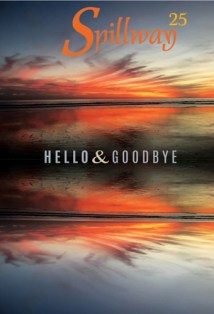
spillway25

This year’s issue of Tebot Bach’s poetry journal Spillway has recently come out, and it includes a poem by yours truly: “The Magician’s Retirement Speech.” It’s quite an honor to see my work alongside the likes of Ilya Kaminsky, David St. John, and the late Chana Bloch.

Special thanks to outgoing editor Susan Terris, and congratulations to my fellow contributors!

Spillway 25 is available for purchase from their website.

A Top 5 List: Modern Poetry Classics

Shanah McCready, known to the Internet as the Bionic Book Worm, organizes a series of book-related Top 5 lists every Tuesday. This week’s theme is “modern classics,” which is quite a broad topic, and an inherently speculative one. After all, who knows what future generations of writers and readers will latch onto? I doubt anyone thought Theodore Dreiser’s Sister Carrie, for example, would cast such a long shadow on American literature.

The doubt involved in making a list of “modern classics” is doubly present when it comes to poetry. Given how vanishingly rare it is for a contemporary poet to achieve broad recognition in the literary community, let alone the general reading public, picking any collection as a potential staple of future reading lists seems, shall we say, hopeful.

But I shall remain hopeful. As such, I’ve decided to put poetry front and center on this list. Here are five poetry collections released since 2000, listed in order of release, which at the very least ought to be considered modern classics.

Sleeping with the Dictionary

1) Harryette Mullen, Sleeping with the Dictionary
University of California Press, 2002
Links: publisher | Amazon

I’ve lost track of how often I’ve pressed this book under the weight of the photocopier, curious to see how students will react to Mullen’s plays on form. This is a collection that turns “Goldilocks and the Three Bears” into a police blotter (“European Folk Tale Variant”), a courting ritual into a litany of tongue-twisters (“Any Lit”), and Shakespeare’s Sonnet 130 into a paranoid rant about the Walt Disney Company (“Variation on a Theme Park”). Mullen takes the diction and rhetoric we take for granted everyday and puts it through the grinder, showing how meaningless (or meaningful!) it is at base. It’s a collection I’m not sure I will ever full-heartedly love, but it’s one I will always deeply respect.


Sea of Faith2) John Brehm, Sea of Faith
University of Wisconsin Press, 2004
Links: publisher | Amazon

Whereas Sleeping with the Dictionary is a book that always inspires me to think about writing, John Brehm’s Sea of Faith in one that inspires me to actually write. Nearly every poem in the collection is one I wish I could have written, because Brehm’s an expert at converting raw sensory inputs into polished works. Take “Coney Island,” which piles one overwhelming detail on top of another, to the point where I believe that “we’ll actually / get on a rollercoaster / just to calm ourselves down.” For another: “Sound Check, Lower Manhattan,” which finds the profundity beneath what sounds like  “[j]ust a jumble of songs and jackhammers and / roaring garbage trucks.” Sea of Faith is probably my most obscure pick, which is a great shame. It deserves a wider audience.


Blood Dazzler

3) Patricia Smith, Blood Dazzler
Coffee House, 2008
Links: publisher | Amazon

An unfortunately timely choice, Patricia Smith’s collection of poems about Hurricane Katrina is a poignant and inventive account of that storm’s particular devastation. Smith both employs a wide variety of forms (free verse, sestinas, abecedarians, etc) and inhabits a number of personas (politicians, residents, even the storm itself) to get the full scope of the tragedy across to the reader. If nothing else, you should listen to some of Smith’s readings on the Poetry Foundation website, which brutally highlight the sound-play at work, especially with regards to the poem “Katrina”: “I was bitch-monikered, hipped, I hefted / a whip rain, a swirling sheet of grit.”


Dear Corporation,4) Adam Fell, Dear Corporation,
H_NGM_N, 2014
Links: publisher | Amazon

Inspired by the United States Supreme Court ruling Citizens United v. FEC, Adam Fell’s prose poems addressed to the person Corporation burn with confused rage and raging confusion; as one of the letters begins, “I don’t know how to say how I feel politely, or poetically.” Despite, or perhaps because of, the collection’s political origins, each letter is also a deeply personal statement; the mere thought of the speaker reaching out to Corporation, of all persons, for solace is heart-rending. And as with Smith, Fell is an excellent reader of his own work. If you can find a recording or see him read in person, do so.


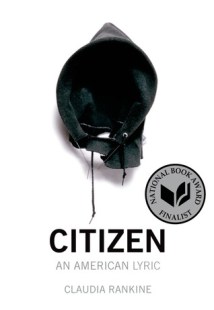
Citizen5) Claudia Rankine, Citizen: An American Lyric
Graywolf, 2014
Links: publisher | Amazon

If you follow poetry, then you knew this one was coming. A multimedia meditation on race in modern America, Claudia Rankine’s Citizen: An American Lyric proved relevant to the broader literary conversation in a way that so few poetry collections are able to today. That alone would almost guarantee it a spot on any list of classics; that these reflections are so sharp only puts it over the top. Seriously, the decision to cast John McEnroe as a Greek chorus in the essay on Serena Williams is absolutely brilliant (and given recent happenings, strangely prescient). To quote the book’s final line: “It was a lesson.” Indeed, indeed.

So there’s my list. What do you think? Are there any poetry collections released this century that you would have included? Let me know in the comments.