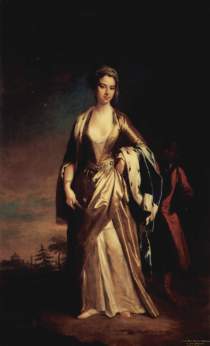
 Writing these close readings as a regular feature for the blog has given me many things: a chance to sort out my own, disordered thoughts; a venue to practice my critical reading skills; even a microscopic audience for my writing. But one benefit I’ve just started to appreciate is that, in writing up these pieces, I’ve introduced myself to some interesting historical figures. I wasn’t much aware of Charlotte Smith’s role in the early Romantic movement, or Thomas Moore’s involvement in revolutionary Irish politics. But I think, in terms of having a fascinating biography, no one I’ve covered quite stacks up to Lady Mary Wortley Montagu.
We’ll hit some of those notes along the way, but for now, let’s take a look at one of her poems: “A Receipt to Cure the Vapors.” The title alone got my attention, we’ll give the whole text a read-through.
A Receipt to Cure the Vapors
I.
Why will Delia thus retire,
And idly languish life away?
While the sighing crowd admire,
‘Tis too soon for hartshorn tea:
II.
All those dismal looks and fretting
Cannot Damon’s life restore;
Long ago the worms have eat him,
You can never see him more.
III.
Once again consult your toilette,
In the glass your face review:
So much weeping soon will spoil it,
And no spring your charms renew.
IV.
I, like you, was born a woman,
Well I know what vapors mean:
The disease, alas, is common;
Single, we have all the spleen.
V.
All the morals that they tell us,
Never cured the sorrow yet:
Chuse, among the pretty fellows,
One of honor, youth, and wit.
VI.
Prithee hear him every morning
At the least an hour or two;
Once again at night returning—
I believe the dose will do.
We might as well begin with the title, which promises the reader something useful: “A Receipt [i.e., a formula] to Cure the Vapors.” The “vapors,” as the term was used in the 18th century, refers to a nebulous mental disorder primarily diagnosed in women and characterized by depression, hypochondria, fainting, and so forth. (The name comes from its supposed cause: gaseous emanations from the internal organs. This condition was also known as “spleen,” as we see in the fourth stanza.) Thus, the poem presents itself as a remedy for something that resembles depression.
That Lady Mary would write a poem of medical advice is not surprising when you consider her biography. In addition to her career in letters, Lady Mary was England’s leading advocate for small inoculation, which she learned about during her husband’s tenure as an ambassador to the Ottoman Empire. Reading this “Receipt,” one gets the sense that the speaker’s medical knowledge covers more than smallpox; she says it is “too soon for hartshorn tea” (line 4), an ammonia-based brew related to smelling salts that was commonly used to treat the vapors.
In addition to any public-minded goals, Lady Anne may have had a personal impetus to write this remedy down. The footnotes to the poem in The Norton Anthology of Poetry say that the “Receipt” was “apparently written to Lady Anne Irwin, widowed eight or nine years previously,” though she is not referred to by name here. Rather, the speaker gives her the generic poetic name of Delia, and so one can reverse engineer that Damon in stanza 2 is Lady Anne’s deceased husband. These pseudonyms allow Lady Mary to respect her friend’s privacy while still using her situation to address a social concern.
So what is this promised cure for the vapors? Well, it takes the speaker the length of the poem to actually get to it. Indeed, the speaker spends much more time detailing the symptoms of Delia’s condition. Delia is inclined to “retire, / And idly languish life away” (1-2), suffers from “dismal looks and fretting” (5), and is given to “So much weeping” that she may “spoil” her appearance permanently (11). Whether or not “a case of the vapors” is the best way to describe her condition, it certainly seems that Delia is severely despondent.
To go off on a slight tangent: the poem’s musicality tends to underscore the uneasy feeling associated with the vapors. The poem’s base rhythm is alternating lines of trochaic tetrameter (eight syllables, alternating stressed and unstressed: “All those | dismal | looks and | fretting”) and trochaic tetrameter catalectic (same as before, but with the last unstressed syllable dropped: Cannot | Damon’s | life re | store“). Trochaic rhythms are particular incessant, always pushing forward, yet the stress pattern means one tends to end on the unstressed, weaker syllables. One leaves a trochaic line feeling incomplete, as though one more syllable is needed to round things out. That seems fitting for the vapors, doesn’t it? (One could say the same of the poem’s use of slant rhymes.)
Not only does the speaker linger over the symptoms of the vapors, but also she deploys some misdirection in prescribing her cure. From the first two-thirds of the poem, one would get the impression that what Delia really needs is a stern lecture. In the second stanza, the speaker tells her in no uncertain terms that her beloved Damon is gone: “Long ago the worms have eat him, / You can never see him more” (7-8). In the third, she commands her to “consult [her] toilette,” her “face review,” with the warning that “no spring [her] charms [will] renew” if she keeps on weeping (9-10, 12). And in fourth, she says the vapors are just a common problem for women: “Single, we have all the spleen” (16). The speaker doesn’t quite say, “Just get over it,” but the sentiment creeps close to it.
Yet right as the speaker got me scratching my head, the fifth stanza offers a bit of a swerve. “All the morals that they tell us,” the speaker says, “Never cured the sorrow yet” (17-18). In other words, the sort of lecturing the speaker has indulged in up to this point is of no use in bringing Delia out of her despondency. That’s an unexpectedly comforting thought coming from 1730. Further, rather than offering a universal cure for the vapors, the speaker suggests something more specific to her friend’s case.
And that cure is: another man. She tells Delia to “Chuse, among the pretty fellows, / One of honor, youth, and wit” (19-20). If the death of Damon is the cause of her condition, the thinking goes, then finding a new man to love should remedy it. It’s a little disappointing that the speaker’s cure is so other-centered, but it’s in keeping with Lady Mary’s larger body of work. Her most famous poem, “Epistle from Mrs. Yonge to Her Husband,” is a critical look at society’s double standards regarding gender relations, particularly how “The judging world expects [women’s] constancy” (14), but will forgive men their infidelity. Viewed in this context, the “Receipt” is a cheekier variation on the same theme.
This context also brings into sharp focus an ambiguity in stanza four that I haven’t mentioned yet. The last line of that stanza, “Single, we have all the spleen,” can be taken two ways. The first way, I’ve already mentioned: women are “Single” in succumbing to the vapors, that is, they are the only ones who suffer from it. But that line can also be paraphrased as, “Women will suffer the vapors when they are single, i.e., not in a relationship.” No one would object if a man in a similar position tried out the dating scene again; why should it be any different for a woman?
Again, this is not necessarily great advice. Companionship can certainly be comforting for those in a depressed state, but those relationships can’t solve the fundamental problem. But the speaker doesn’t advise going all in with this “pretty fellow,” either. She instead recommends, as one should with any remedy, exercising moderation. Delia ought to “hear him every morning, / At the least an hour or two,” and hear him “Once again at night returning” (21-23). That, for the speaker, ought to be the sufficient “dose” to overcome the vapors (24). It’s like taking two aspirin, except it’s two rendezvous.
By the end, one gets the sense that this was never “A Receipt to Cure the Vapors” at all, but rather a critique of the whole diagnosis. Conceptually, “the vapors” is not too far removed from the clinical sense of “hysteria”: a medical-sounding term used to dismiss women’s emotional states as disordered. Such states are not diseases; they’re not like smallpox. One cannot simply administer smelling salts or devise an inoculation and have them be “cured.” One must treat those who suffer “the vapors” as fellow humans, and nothing less.
* * *
Thanks for reading! If, like me, you’re interested in outdated medical and scientific concepts, you might want to check out a very old post on this blog, in which I analyze Stephen Jay Gould’s article “Dr. Down’s Syndrome,” which critiques some of the inaccurate and racist terminology surrounding the condition.
 English classes have an odd relationship with early-modern English drama. Shakespeare is all but mandatory as part of the curriculum, but his contemporaries hardly get mentioned, let alone read: none of Ben Jonson’s intricate city comedies, none of Thomas Middleton’s tragic bloodbaths. But I feel Shakespeare’s dominance is especially a shame when it comes to Christopher Marlowe, whose work not only influenced the Bard’s but also matches it in pure, visceral pleasure. Marlowe’s characters are larger than life, always scheming, and elicit viewer sympathy despite their many, many vices.
 There are some writers whose works, while critically lauded and oft-studied at the university level, rarely make their way onto high school reading lists because of their perceived difficulty. I’m thinking of authors such as William Faulkner, Virginia Woolf, and the dean of this odd school, Henry James. Untangling James’s syntax is a true challenge that every student of literature must eventually face, but Washington Square is an exception in his bibliography. Indeed, it reads less like James and more like that mainstay of English classes, Jane Austen. (Apparently this was much to James’s chagrin, but what does he know?)
 One of the best literature courses I took as an undergraduate was called Capital Fictions, which was an exploration of economic themes in late 19th- and early 20th-century American literature. I was tempted to try shoehorning half the syllabus onto this list—ooh, people should actually read The Jungle! ooh, McTeague is a masterpiece of literary naturalism! ooh, “The Tenth of January” is a fantastic short story!—but in the end, I exercised something resembling disciplined and settled on the one book that I found the most eye-opening.
 Don DeLillo writes the accessible sort of “weird” books that I’m certain would have totally blown my mind when I was in high school. White Noise isn’t “funny,” exactly, but there’s a lot in the book to quietly snort at, and unlike, for instance, Thomas Pynchon’s The Crying of Lot 49, one doesn’t need to be well versed in Jacobean revenge tragedies to get the joke. The fact that the protagonist, Jack Gladney, is a leading scholar of Hitler studies (snort) who doesn’t speak a lick of German (snort) is amusing no matter one’s stage of cultural awareness.
 Poetry tends to get short shrift in English classes, with maybe a few weeks dedicated to the entire tradition. A Brit lit class might touch on the Romantics, an American lit class on Whitman and Dickinson, but not much beyond that. Still, most students graduate with at least some understanding of what a sonnet is, or at least an understanding that they exist and that Shakespeare wrote a whole bunch of them. The sonnet has proven to be an enduring form, and if anyone’s work demonstrates the power of a well-turned sonnet, then it’s Edna St. Vincent Millay.
 Of course, what high school English classes really need is more contemporary poetry, and by “contemporary,” I mean “anyone after Robert Frost.” Students come away from their secondary education with the notion that poetry is a dead art that only deals with archaic subject matter and must sound like the mad ravings of a pantalooned troubadour. And, to be sure, a lot of contemporary poetry is unintelligible to the uninitiated reader. But just as much is plain-spoken, personal, and relevant to the world outside academia, like the work of Yusef Komunyakaa.
 To round out this accidental trio of poetry collections, here’s a book that straddles the line between Millay’s formalist magic and Komunyakaa’s deeply detailed free verse. Rita Dove’s Mother Love is a long sequence of loose sonnets, and part of the fun of reading it is figuring out which aspects of the tradition (length, rhyme, meter, subject, volta) is Dove employing in a given poem and which she is ignoring. In purely practical terms, it’s a great way to gauge students’ understanding of the tradition’s formal requirements.
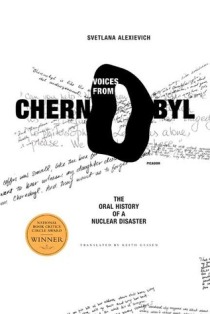 When I was first composing this list, I thought about including some more works of history, such as Stephen Schlesinger and Stephen Kinzer’s Bitter Fruit or John W. Dower’s Embracing Defeat. But while books like those cover topics which often go undiscussed in high school history classes (the CIA-backed coup in Guatemala, post-WWII Japan), as texts they tend to be dry and rather conventional. The material that these writers tackle is vital to understand, but their particular expression is not necessarily as compelling.
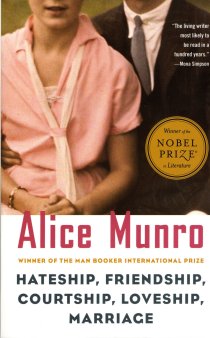 Before, I said that poetry needed more presence in high school curricula, but short stories could probably make the same claim. At least in my experience, short stories were either used as supplementary material for a novel (like reading Kate Chopin’s “The Story of an Hour” alongside The Awakening), or as a means of chewing up class time after hitting all the syllabus material. And as for contemporary short stories, the sort that would fill out an issue of The New Yorker, well, those simply didn’t exist; I didn’t realize people still wrote short stories until undergrad. So why not at least give students some Alice Munro to chew over?
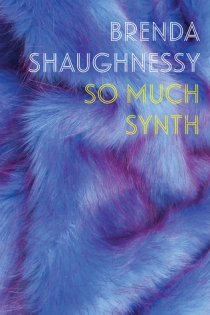 I fear this list has become too academic, so let’s close things out with a book that’s a bit more fun. I’ve raved about Brenda Shaughnessy a couple of times on this blog before (e.g.,

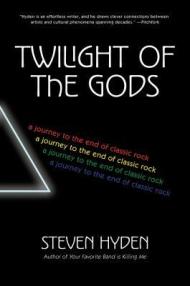 Still, I went into Twilight of the Gods with an uncertain feeling, not because I didn’t know what to expect, but because I was fairly sure that I did. How much of the book, I thought to myself, would be brand new (or at least, new-to-me) insights and arguments, and how much would be reworded or repeated versions of past columns, ones that I had already read for free? That’s really something one must keep in mind when reading any book by a columnist: the possibility that you’ve literally read this all before.
 Michael Mingo's Blog